
Stay731: Gravity
Gravity, the force that an object exerts on those things around it, is directly proportional to its mass. This is basic physics and one of the most basic principles that shape our physical world. It is the reason why our world is the way it is, but there are other types of gravity beyond a physical force pulling us constantly toward the center of the earth.
I have often in conversations with people about living in Jackson, heard the city described as a black hole or they feel like it is quicksand, and while they meant these statements to be in some way derogatory they are the exact opposite of that. Statements like these should remind us of the way that cities should act and encourage us to remain there. These are marks of the vitality and health of our own city. Communities are both physical locations and at the same time in their truest sense they are far more than just this. They can be moved or change their appearance. The physical objects and people they are made of come and go in a constant cycle of change, but it is this substance out of which communities are made that like all matter pulls us toward itself. And while this pull is not a physical attraction, though it sure feels like it sometimes, being rather emotional and spiritual its strength is not lessened because of this.
I would be lying if I did not admit that I have often felt the same way, and still do sometimes. There are things about being in Jackson that I might find irksome, or some other place might seem to have so many more offerings that it would be easy to become discontent with this place, but I have spent time in Los Angeles, London, Paris, and Rome. There are few cities that can offer more in the way of amenities that might entice, me in particular, but I never found myself loving those places the way I do this one. Eventually, I began to ask myself why this was. Why am I still here?
“I have spent time in Los Angeles, London, Paris, and Rome. There are few cities that can offer more in the way of amenities that might entice, me in particular, but I never found myself loving those places the way I do this one.”
The answer is Gravity. We, my family and I, are kept here through the constant pull and attraction of the relationships that we have made, and as I have thought about it, I think this is one of the best possible reasons to be somewhere. This is any city’s highest goal, as a fostering place for the development and flourishing of communities that will bind their citizens ever closer and closer together and by extension to itself. For cities to do this is a matter of self-preservation, and if they fail to do this they will dwindle until they are shells of their former selves, or in more extreme cases they will die.
This used to be much more common fact of life. Most people were born and lived and died in the same place. It was an unusual person or unusual circumstance that caused someone to uproot themselves and move to a new and unfamiliar place. We are so accustomed to this now that I think we have become in many ways calloused to the effects that it can have on us. When we leave a place, we wound ourselves; the relationships that we have built and poured ourselves into are damaged, and therefore so are we. We lose large parts of who we are in leaving home, friends, and family. This process of losing is not always equal to the perceived gains that come with moving.
This is the reason we are still here. For over ten years my wife and I together have a created a life here. We are invested in multiple communities: religious, educational, personal, and what is the gain from leaving? Every little while as we sit and talk about our future thoughts and plans, this is the center of our discussion, the weighing formulation whose end product has always kept us here, kept us investing in these communities. And that doesn’t mean that it might not change at some point, and the gain of leaving might become greater than the pull of stay, but time does has a cumulative effect.
“It is not in the number of new people a city attracts that measures its success, but rather in number and happiness of those it retains.”
The fact that there are so many people in our city who feel like they might in some ways think that they should leave but do not want to is a powerful statement about the present health of the city and its future. The city in spite of numerous problems (and let’s be honest, all cities have numerous problems; we just don’t see them because we don’t live there) has created a host of communities that pull the inhabitants of the city constantly back toward its center every time they might think about leaving. It is not in the number of new people a city attracts that measures its success, but rather in number and happiness of those it retains.

Kevin Vailes teaches whatever they ask him at the Augustine School in Jackson, though if he had his choice he would spend his time ruminating on the intricate complexities of the classical world and trying to get his Latin students to study their vocabulary. Kevin grew up in and around Jackson and went to Union University where he met his best friend and wife Elizabeth. They live in the Jackson’s historic LANA neighborhood in a 100+ year-old bungalow with their five children. He believes that stories are what bind us together and cause us to love and care for something, and he hopes that in sharing Jackson’s stories with you, you will fall in love with Jackson and care about it too.
Header image by Katie Howerton.


In the vibrant tapestry of the Jackson community, few threads shine as brightly as the one woven by Wendy Trice Martin. As a stalwart advocate for equal justice and cultural awareness, Wendy has dedicated her life to fostering unity and empowerment in the Jackson community. She has been a master storyteller, a devoted educator, a community convenor, and a mother to so many. And through her tireless work, she has helped our community witness significant changes, while inspiring countless others.


Jackson is home to some of the best mural artists in West Tennessee! In the past few years, the Mayor’s Public Art Initiative, and through efforts of many others like Our Jackson Home’s Artist in Residence program, there has been an explosion of new art popping up in and around Jackson. Whether you are joining us on this virtual tour, or going on adventure of your own, we hope you find time to explore our hometown in a new light by supporting these amazing artists. If you go on your own art-fueled adventure, we would love to see your photos! Use the hashtag #OJHmuraltour on Instagram to support local artists.

Anyone who knows Winfred Keith Davis knows there’s something to be discovered at every turn. To some, he is a yoga teacher, leading meditations and creating space to heal body and mind. To others he is a mentor, reading with a student at a local elementary school, or a voice in the community choir, or an actor on the stage at the Ned.Standing in his garden, this kind of fullness of life is on clear display. It’s a teeming work in progress. There are trays of plants waiting to be planted in the earth, and a wheelbarrow full of mirrors that will be placed to reflect more light in the garden.
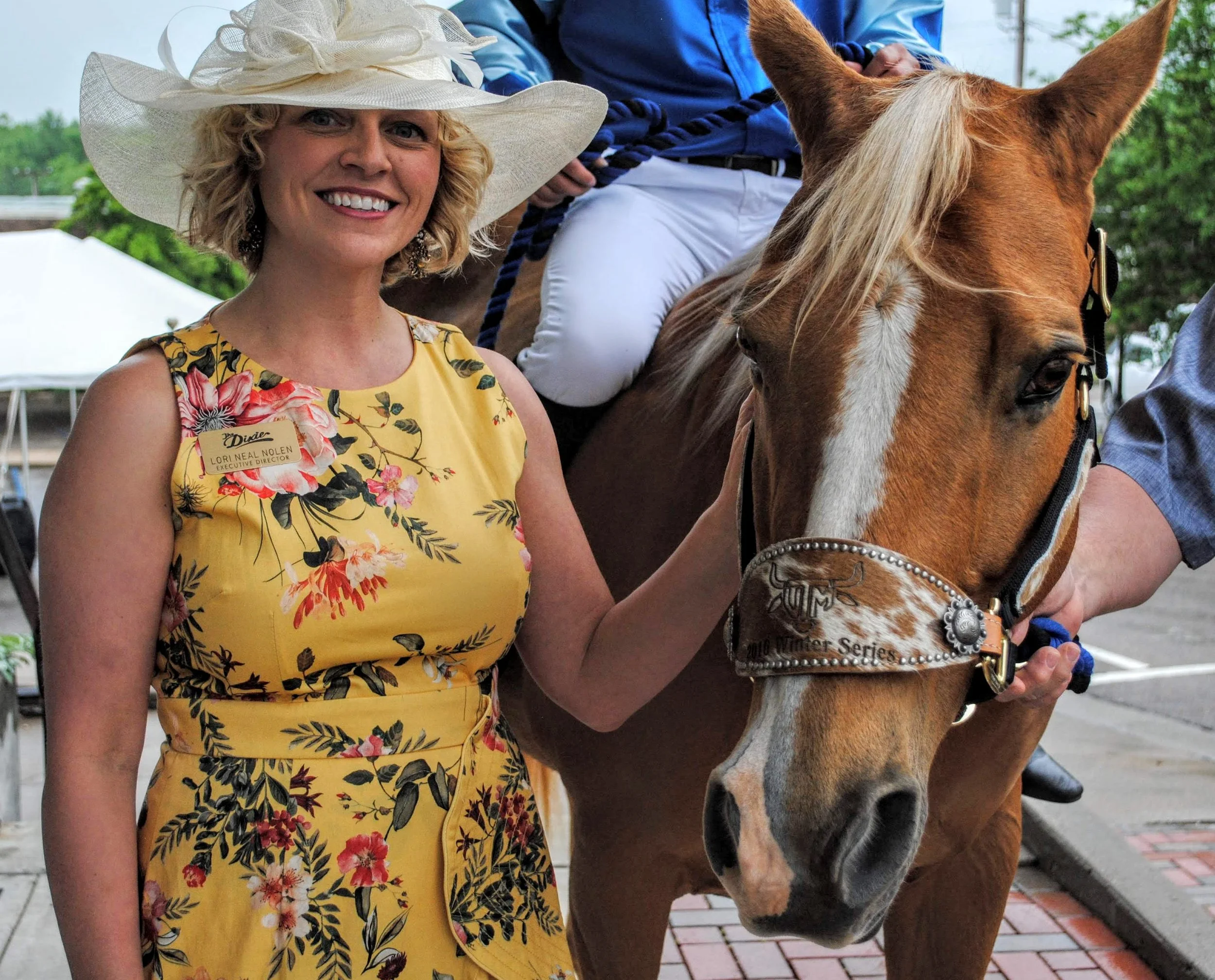
It’s not every day that you see a horse and jockey standing at the entrance to a fine arts center. In fact, living in Tennessee, you wouldn’t normally see a horse and jockey anywhere. Horse racing used to be popular in Tennessee, with the first horse race held in Gallatin in 1804. However, the anti-betting law of 1906 put an end to traditional horse racing in the state. Still, breeding and riding horses remained popular. There is steeplechasing in Nashville, where horses and jockeys leap over obstacles on a turf course.

There are plenty of conversations about what art is and isn’t, who it is and isn’t for. I’m interested in this conversation, but I can’t answer that question, unless I answer it for myself. This September, I painted a mural that is now one of the first things to greet you when you arrive in downtown Jackson. Nestled just past Grubb’s Grocery and the Jackson Walk on North Highland, it’s a bright and idyllic scene, and I’m not oblivious to the fact that it’s an even more idealistic message: Love your neighborhood.

What bizarre days we’re living in right now, friends. Never in remembered history – my 91-year-old grandmother couldn’t even recall a time such as this – have we been asked to hunker down at home for the health and safety of ourselves and our community. There is a lot of uncertainty and stress revolving around this situation, but I’m typically one to look for the silver lining. One thing that has really struck me about this crazy and unexpected time is how it has forced innovation and fostered creativity in people. From business owners to parents, folks are discovering new ways to connect, to promote, to teach and learn, to shop, and much more. Nothing really looks the same in our daily activities, but life must go on. It’s pretty amazing how adaptable we can be when we have to.

The Great Stay In of 2020 has begun and I have so many mixed up feelings. It feels good to be doing my civic duty by observing social distancing. It’s small but it’s something, you know? I’m glad to be home with my family, making soup and playing games. Sometimes I can almost forget this isn’t just a normal spring break but something different altogether. The pause in the busy routine of daily life has been oddly welcome around here so far but I can hardly enjoy it for longer than a few minutes at a time.

At the fringes of Natchez Trace State Park, passersby wouldn’t have an inkling of thought to wonder what is being built just down the dirt drive leading into the woods. It’s completely unassuming, and for at least three bumps in the road, I’m not not sure if I’ve arrived in the right place—until a bouncy Rhodesian Ridgeback pup comes galloping up the road, barking to signal my approach. Ranger gives a couple sniffs to the air and a cautionary bark to make sure I’m not an intruder, then happily licks me head to toe.

It was late, and the ferry felt cool in the summer’s evening breeze. We were only a week into my summer in Istanbul, but in our short time learning basic Turkish, navigating public transit, and hopping between Asia and Europe the way I do now between Highland and the Bypass, we felt like naturals. The warm glow of the nearest café’s neon sign welcomed us to the European shore where the five of us girls were staying for the week, and we didn’t need much convincing to stop in for a late-night dinner of pasta and whatever scrumptious-looking mystery pastry the shelf held.

You can find them at the corner of Westwood and Summar, really anytime of day—the group of men of various ages, sometimes a few women or children mixed in. They gather around in a circle in white, resin chairs, discussing sports, the daily goings on in the news, or updates on their kids and grandkids. (That’s at least what I imagine; they could be talking about nuclear physics or the Kardashians, what do I know?) These gentlemen seem to be the epitome of “community.”

There’s a piece of land on the north side of Jackson that looks pretty much any other open lot. It sits at the edge of town just beyond an abandoned golf course and right behind VFW Post 1848. You could walk on that open lot and never have any idea that underneath your feet lay broken pool tiles, aqua blue concrete steps, maybe a piece of an old diving board—remnants of bright summer days, now covered in dirt and twelve feet below the surface.

This September will mark four years of my career at Chandelier Restaurant here in Jackson, and I’ve enjoyed every minute, from my first years as a server to my recent promotion to fine dining assistant manager. Chef Jennifer Dickerson opened this fine dining spot in 2015, and I know the entire community would agree that it has raised the bar for our city’s cuisine.

Wow—what an incredible second year of our 731Day Porchfest! Check out this highlight reel by Jameson Winter, featuring LOLO's revised version of "Wasted in Jackson," written just for this event.

At the end of every school year, I have my students create a portfolio of different types of original poetry. I’d like to think I do it in order to foster their creativity, but it’s really because I’m too lazy to grade eighty-four final exams. Either way, it’s a win/win for all of us: they get to write sonnets and pretend that they’re actually writing their first rap hit, and I get to sit back and not grade bubbled-in answer documents. One poem they always struggle with is an elegy.

Two or three times a week, I put my body through the ringer. For thirty minutes, I do exercises that a man approaching forty probably shouldn’t attempt. I throw my body to the ground and spring up as quickly as I can. I push a weighted plate across the floor. I crawl like a bear up and down mats made of rubber. After all that is finished, I put on boxing gloves and hit a heavy bag that sometimes feels as if it’s made of concrete. When I kick it, my foot and shin turn red and bruise. My shoulders and arms feel as if they’re weighted by stones.

Even though I’ve lived in Jackson for almost twenty years, I still feel like a newcomer in a lot of ways, so it surprises me when somebody I think has lived here for quite a while tells me they didn’t know that Jackson has a third post office. It makes sense, when I think about.

I had a college professor tell me once, “Remember, you are changing your generation and the generations of the people around you.” Those words are so true and are still relevant in my life today. In fact, that professor was living proof of that statement by changing my life with mentoring, advising, and pushing me to be better. It was not just that one professor, of course. There were (and still are) many people who continually wanted to invest in me as I grew up here. My father and mother met at Lambuth University, but my dad was not in school there.
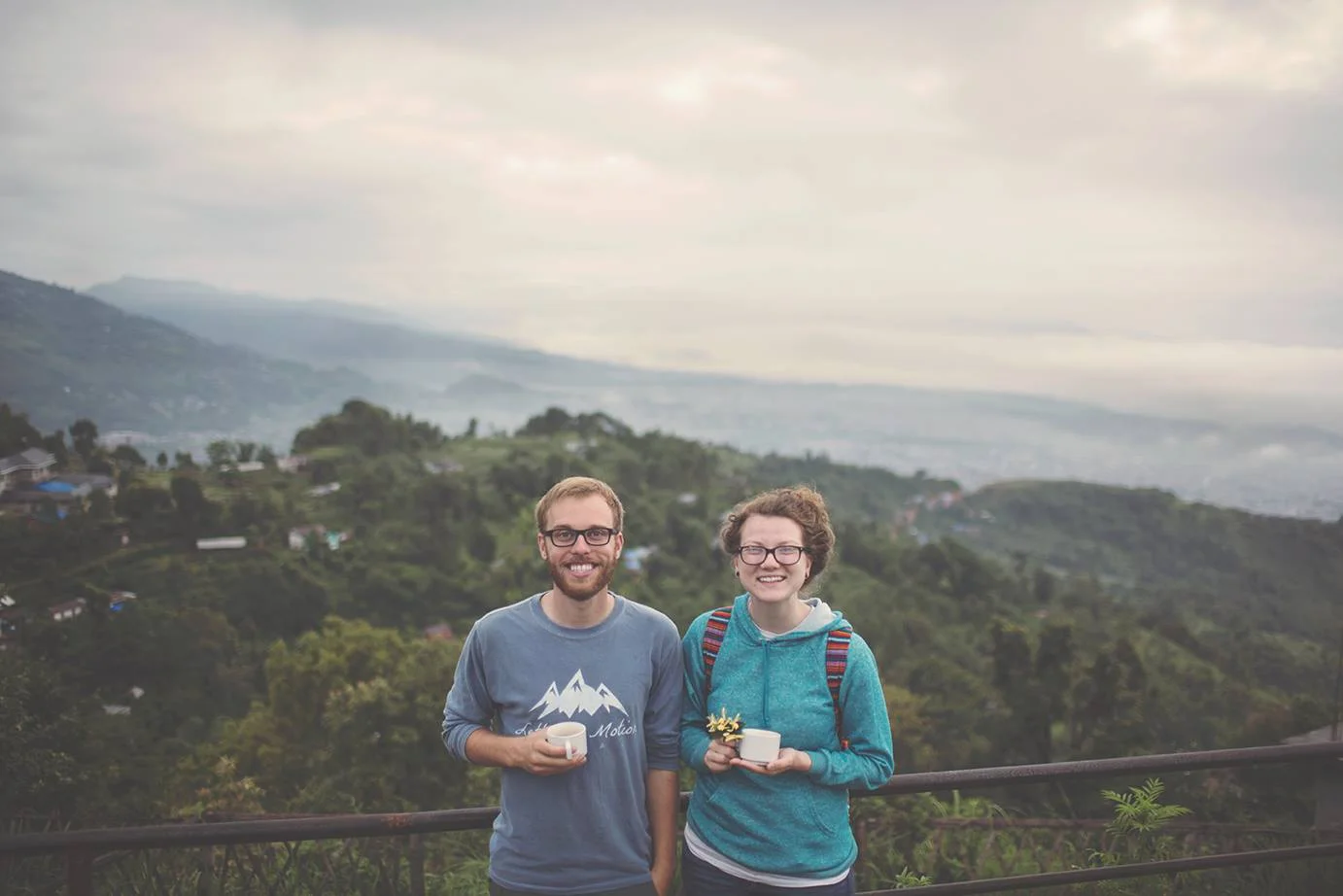
Martin, Tennessee, is a town with a population of around 11,475. It’s known for its annual Tennessee Soybean Festival and for the University of Tennessee at Martin. If you drive down University Street, you’ll go right through the university, pass by Sammie’s (an aptly-named sandwich shop), and mosey by several boutiques and small shops. It’s a small, charming place. Locals support the UTM Skyhawks and the Westview High School Chargers and eat at The Grind.

I’m sitting by myself, the steady thrum of others’ voices around me, and I’m looking at a white sign with neat black lettering: “WHERE HOT COFFEE AND WARM CONVERSATION FLOW.”I’ve got the hot coffee part—it’s steaming pleasantly in a glossy brown mug—and I can hear the groups talking around me. There are some college students in the corner of the room. (I can tell they’re in school because of their tired eyes trained on the laptops perched in front of them, even as they continue to hold conversation with each other.)

“Where are you from?” The dreaded question. Whenever someone asks me this, I laugh and try to assess whether the person asking wants the long answer or the short one. Even the long version has been condensed for convenience over the years. This question has had different answers at different points in my life. When I was ten, I was from Northern Kentucky. When I was eleven and my family had moved to South Africa as missionaries, I was from America.

Google gets over 3.5 billion searches a day, processing over 40,000 searches each second. The most common Google searches in 2017 included weather, celebrities, the new iPhone, sporting events, and—making the top ten—fidget spinners. Many of us use Google daily to check how late a restaurant is open, to figure out the name of the actor on the tip of our tongue, to shop, to find directions or recipes, and to scare ourselves by reading way too deeply into the symptoms of a common cold.

Three. It’s a magic number. It’s the Holy Trinity, symbolic of perfection and completion. There were three essential entities in Greek Mythology ruling the sky, the sea, and the underworld. “Third time’s the charm.” Throughout history, the number three has been revered in nearly every culture, even right here in Jackson. We have three governing bodies that have affected and will continue to affect our education system for years: the city council, the county commission, and the school board.

Eight days late and after thirty-six hours of labor from my hard-working mother, I was born at the Jackson-Madison County General Hospital on a hot April day in 1976. Forty-two years later, I am an attending physician in that very same department. It’s very unusual for a physician to practice in their hometown, but I am thankful that my journey has brought me back to where I started. My earliest memory of life in Jackson is from First Presbyterian Playschool.

As I entered into Suite G of 581 Old Hickory Boulevard, I immediately found myself surrounded by waves of smoke, the aromatic scents of assorted cigars, and comic laughter from customers known as “regulars.” Sitting amongst the crowd was new owner Dale Brown. Though he may be a new entrepreneur, Brown is not new to Ye Ole Pipe Shoppe & Cigar Lounge. When he moved to Jackson nearly thirty years ago, he also became a customer to the store.

While perusing the West Tennessee Farmers’ Market, it would be hard to pass by the mountain of deep green vegetables and neon radishes of Rose Creek Farms, owned by Ray and Ashley Tyler. Their farm is nestled in a valley in Selmer, Tennessee, with a little over one acre of active farming land. With the help of high tunnels and row covers, they’re able to extend the typical season barriers to grow deliciously tender greens and veggies all year round.