
Podcast No. 102: Ronnie Coleman of SoulQuest Church
When Ronnie Coleman and his wife began to have the vision for SoulQuest Church in 2006, they had no idea how beautiful the community it has created would be in 2018. Today on our podcast, Kevin Adelsberger interviews this West Tennessee native and pastor about his ministry journey, SoulQuest's search for a permanent location, and what makes this place of worship so unique.
Learn more about SoulQuest on their website.

Kevin Adelsberger and his wife Renae moved to Jackson for college (proud Union alumni) and have stayed ever since. Jackson has since taken hold of Kevin’s heart, and he looks forward to continuing to grow with the city. Kevin opened Adelsberger Marketing in 2014 and saw working with Our Jackson Home as a way that he could serve the city he loves. Kevin and Renae are members of First Baptist Church and volunteer with the youth group there and with Madison County CASA.
Production, editing, and photography by Kevin Adelsberger.
Subscribe to the Our Jackson Home Podcast via iTunes or RSS.

Don’t let the cold weather keep you cooped up all month! Get out to catch some unique events offered this February for lovebirds and professionals to kids and students.

“Where are you from?” The dreaded question. Whenever someone asks me this, I laugh and try to assess whether the person asking wants the long answer or the short one. Even the long version has been condensed for convenience over the years. This question has had different answers at different points in my life. When I was ten, I was from Northern Kentucky. When I was eleven and my family had moved to South Africa as missionaries, I was from America.

While perusing the West Tennessee Farmers’ Market, it would be hard to pass by the mountain of deep green vegetables and neon radishes of Rose Creek Farms, owned by Ray and Ashley Tyler. Their farm is nestled in a valley in Selmer, Tennessee, with a little over one acre of active farming land. With the help of high tunnels and row covers, they’re able to extend the typical season barriers to grow deliciously tender greens and veggies all year round.

2002 was the year that changed my life. I had just moved to “the big city” of Jackson from the incredibly small town of Trezevant, Tennessee. My new journey started at Union University as a Christian Studies major, and quickly I realized I had turned religion into a textbook, not an action. It took a while to recover from the shock of not knowing what I wanted to do with the rest of my life, as this was my plan for quite some time—going into ministry. I continued pressing on with my major until 201 Ash Street happened.

Professor Haelim Allen’s office, like the rest of the art department at Union University, is in beautiful disarray. There are paintings on the walls, half-completed sketches on her desk, various models in differing states of completion on a bookshelf, and of course a second bookshelf overflowing with literature that seems a staple of every teacher’s office. Just outside of her office door is a gorgeous light box which fills the hallway with a sense of peace and calm. The building itself is not by any stretch beautiful, but Professor Allen has transformed her office and the hallway leading up to it into a peaceful, welcoming environment.

I am convinced that every young person dreams of leaving their hometown, going to a larger city, and making it “big.” That was definitely a dream of mine. Born in Memphis, I moved to Jackson with my family at the age of four. Jackson is my mother’s hometown. This is when my understanding of what made living in Jackson special began.My siblings and I were in a childcare program, and Jackson Parks and Recreation’s summer program is where I met many friends.

I moved to Jackson a starry-eyed eighteen-year-old ready for the “real world.” I came to Union University to play volleyball and study my way to becoming a chemical engineer who would change the world with brains and athleticism. Three months into my first semester, I had quit volleyball and was failing at my chemistry courses. A few days into my second semester, a tornado blew away all my belongings, including those starry eyes.

It’s the Wednesday after Labor Day, and Jerry Mercer, senior director of Mercer Brothers Funeral Home, assures me his desk doesn’t always look like this. “But getting ready for the appreciation [day]…” he says, shuffling through the stacks of papers and documents in manila file folders and opened envelopes on his desk. The fax machine emits a whiny cry that reminds me of time spent in the 1990s waiting on dial up Internet, and the office phone rings continuously.

Ordinary guys don’t spend too much time thinking about the best escape route out of a restaurant or a home or out of town. And while most people I know aren’t worried about the trackability of their IP addresses or burner phones or whether or not they’ve been recorded on too many security cameras in public, that’s not the case for Lee Wilson. But then again, Lee isn’t exactly having an ordinary moment.

In 1998, one of the most respected scholars in the world made a profound decision. It was a decision that seemed at odds with much of what had previously happened in his life. Jaroslav Pelikan was born in Akron, Ohio, in 1923 to devout Lutheran parents. His father was a Lutheran pastor and his grandfather a bishop in the Lutheran Church. By the age of twenty-two he had completed both a seminary degree from Concordia Lutheran Seminary and a Ph.D. from the University of Chicago.

You could say I’m a reluctant convert to Jackson, Tennessee. Prior to accepting a job at Union University, I had only ever been to Jackson once—an emergency bathroom break at the Starbucks on Vann Drive. Even when I agreed to the offer, it was with a begrudging sense of the inevitable. My wife Beth and I knew if we turned down the job it would be the wrong choice, but there was nothing in us that relished leaving the vibrance of a city we loved for the sluggishness of a lackluster town we didn’t know.

The precious things are always removed first. They’re handled with care, preserved, and safeguarded so as not to disturb their history or perceived beauty. Careful hands wrap them in padded blankets or quilts and gently set them in an arrangement that will in no way cause a fracture. The pieces that are disposable or not as aesthetically pleasing are swept into a pile or thrown away or burned or sold. And so goes the process of preparing for the demolition of a building.

We started packing shoeboxes when “He-who-is-now-taller-than-I” could fit his chunky-monkey baby legs through the slots in the front seat of the grocery cart, likely with one of those hypoallergenic seat covers. We would fill our box with necessities: toothbrush, toothpaste, comb, and such. Maybe some nifty socks or a hat. Of course, you had to have a coloring book, crayons, and some candy. Oh, and those Little Debbie Swiss Cake rolls. Oh, stink, they will melt in transit. Hmm. . . .

To call Jackson home sometimes feels like a betrayal of the place that taught me the meaning of that word. Two hours east on I-40, home is a small white farmhouse on top of a hill with a porch swing and a bed of roses that welcome you to the front door. At home, the sound of that swing’s rusty metal creaking still steadies me like I imagine the ticking of a metronome does for a novice musician. There are days when I ache for the rhythm of home, just as we gasp for air when deprived of breath.

Noah was five years old when we found out that he had cancer. He was in my Sunday School class and would come walking down the hallways at church with this skipping kind of swagger and the biggest grin on his face, like he knew something—or maybe had just done something. He was always smiling. So one day I asked him why he smiled so much. He grinned even bigger and said, “I don't know.”

It seems quite contradictory to write a piece on why people should stay in Jackson on the eve of our move to Nashville. After eight years of choosing to stay, the decision to leave didn’t come easily, and I certainly put up a fight. However, I had to come to terms with the fact that sometimes a dream is for a season, and it’s okay for dreams to develop towards other places. You don’t have to abandon a sense of “place” once you move.

In eager anticipation of their upcoming concert this weekend, I jumped at the chance to speak with singer-songwriter couple Cody and Melody Curtis as well as vocalist/musician/visual artist Thomas Griffith about PSALLOS. PSALLOS is a musical group made up of fourteen individuals currently supporting their ambitious ROMANS project, a concept album that details the book of Romans in the Bible.

Every April in Jackson, people from all over the area gather together by volunteering to contribute to the annual event “Month of Miracles.” Month of Miracles is a program started by Mayor Jerry Gist to give volunteers the opportunity to be connected to a service project that meets with their individual passions and interests. There are opportunities to help by painting, gardening, photography, and cleaning to just name a few.

In 2005, Bruce Springsteen went on a tour with just himself, an acoustic guitar, a harmonica, and a pump organ. This tour was in support of his album entitled Devils and Dust. It was a follow up to The Ghost of Tom Joad, which was released in 1995, and was a sequel to Nebraska. On each of these albums Springsteen wasn’t backed by the E Street Band.
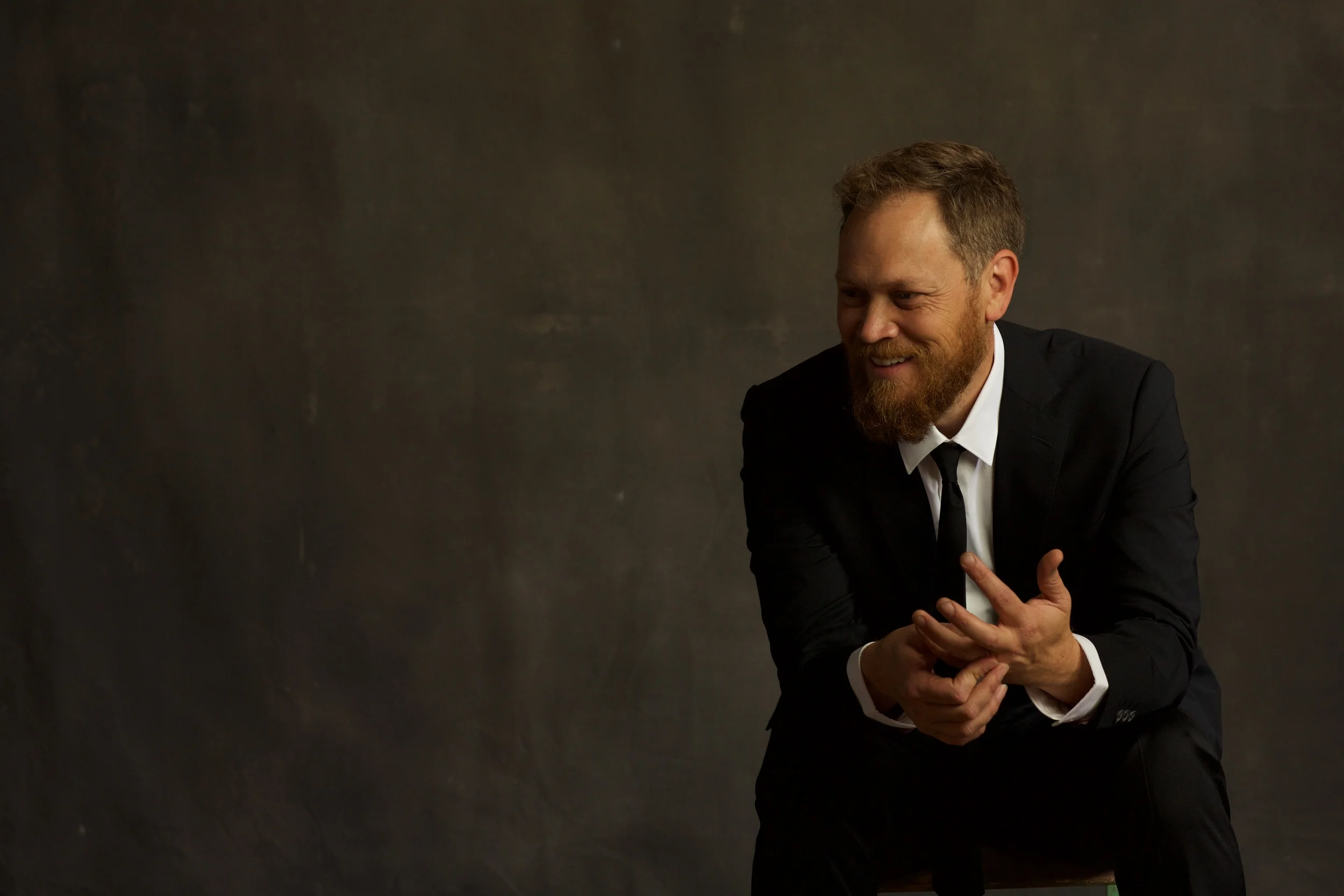
A husband of twenty-one years and the father of three teens, Andrew Peterson is a Christian singer-songwriter and author based out of Nashville, Tennessee. Since moving there from the homeland he lovingly calls "redneck Florida," Andrew has produced seventeen albums and written a four-part book series, The Wingfeather Saga. The Star Center has the joy of welcoming Andrew to Jackson this Saturday, February 20, for a concert at Fellowship Bible Church benefiting their Literacy Lab scholarships.
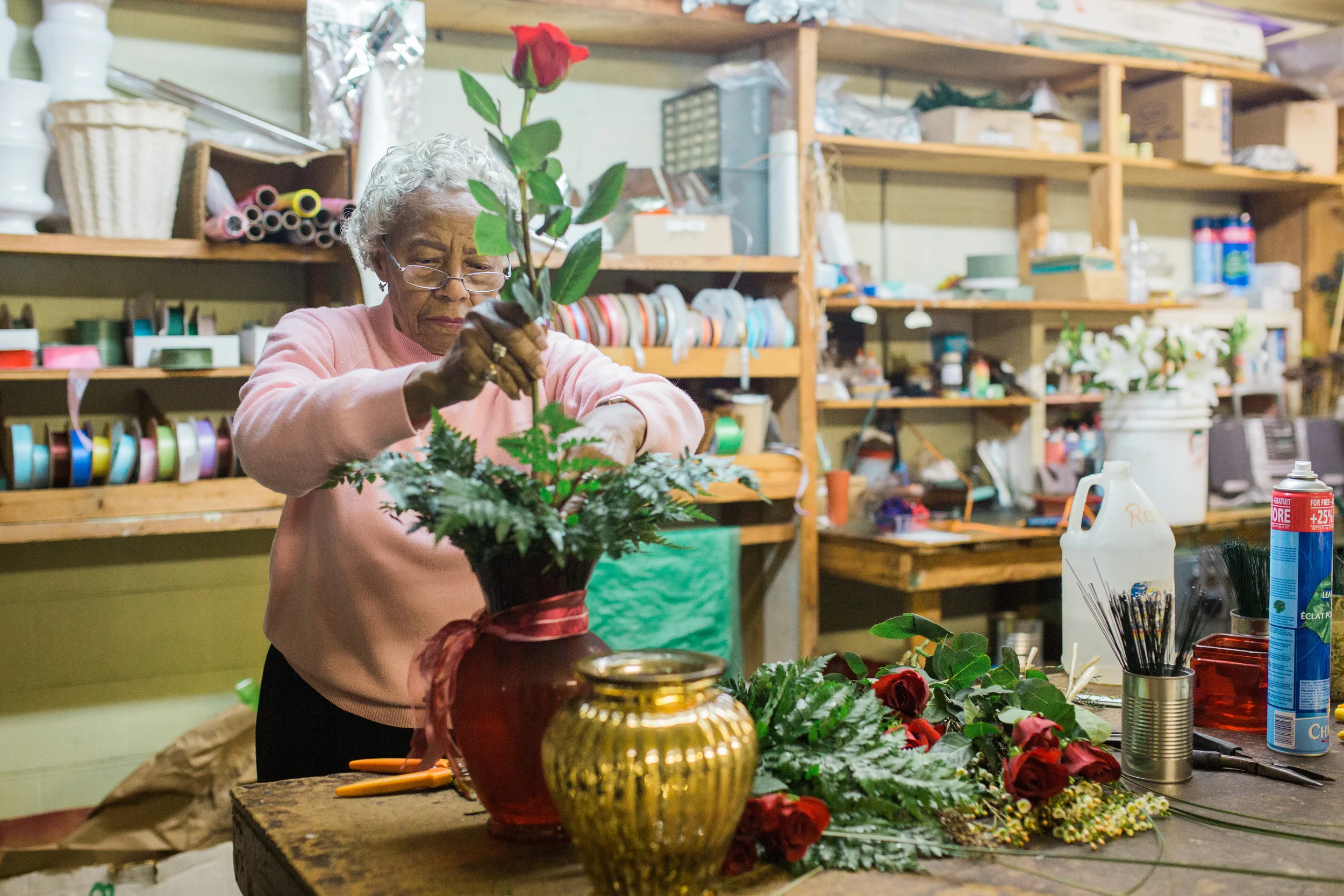
Nell Huntspon Flower Box is a full-service florist located on North Royal Street and has been serving the Jackson area for over forty-six years. When I walked in to meet and interview Nell, she was talking with a customer on the phone, so I browsed the array of house plants and gifts on display in the shop. She smiled at me, and when she finished her call, she invited me to have a seat.
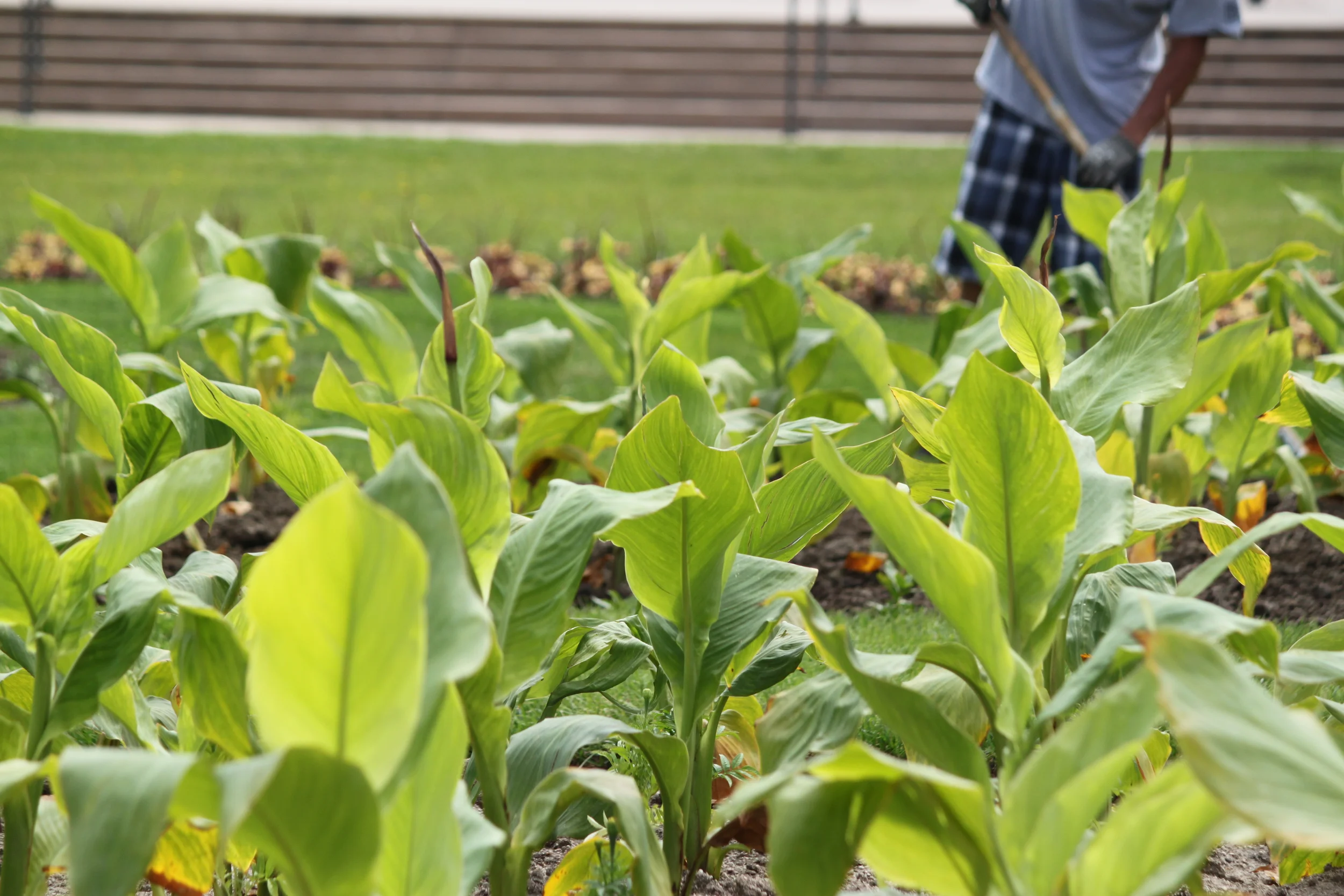
I was born in Jackson thirty-two years ago to an African-American father and a Hispanic mother. Our city was a very different place back then. In fact, it was less of a city and more a small town, with a far less diverse population. Growing up I didn’t have many friends that looked like me, and it was made abundantly clear by my peers that I was going to have to choose a side. But choosing was never really an option for me.

Imagine a table. There are many faces, both black and white, seated around that table. Everyone present wants their stories to be heard and their hardships to be acknowledged. Rightfully so. Sometimes I have the honor of sitting at that table. I sit beside my husband Charles and my best friend Melanie. Naturally, I gravitate toward their voices in conversations on racial reconciliation in our city.
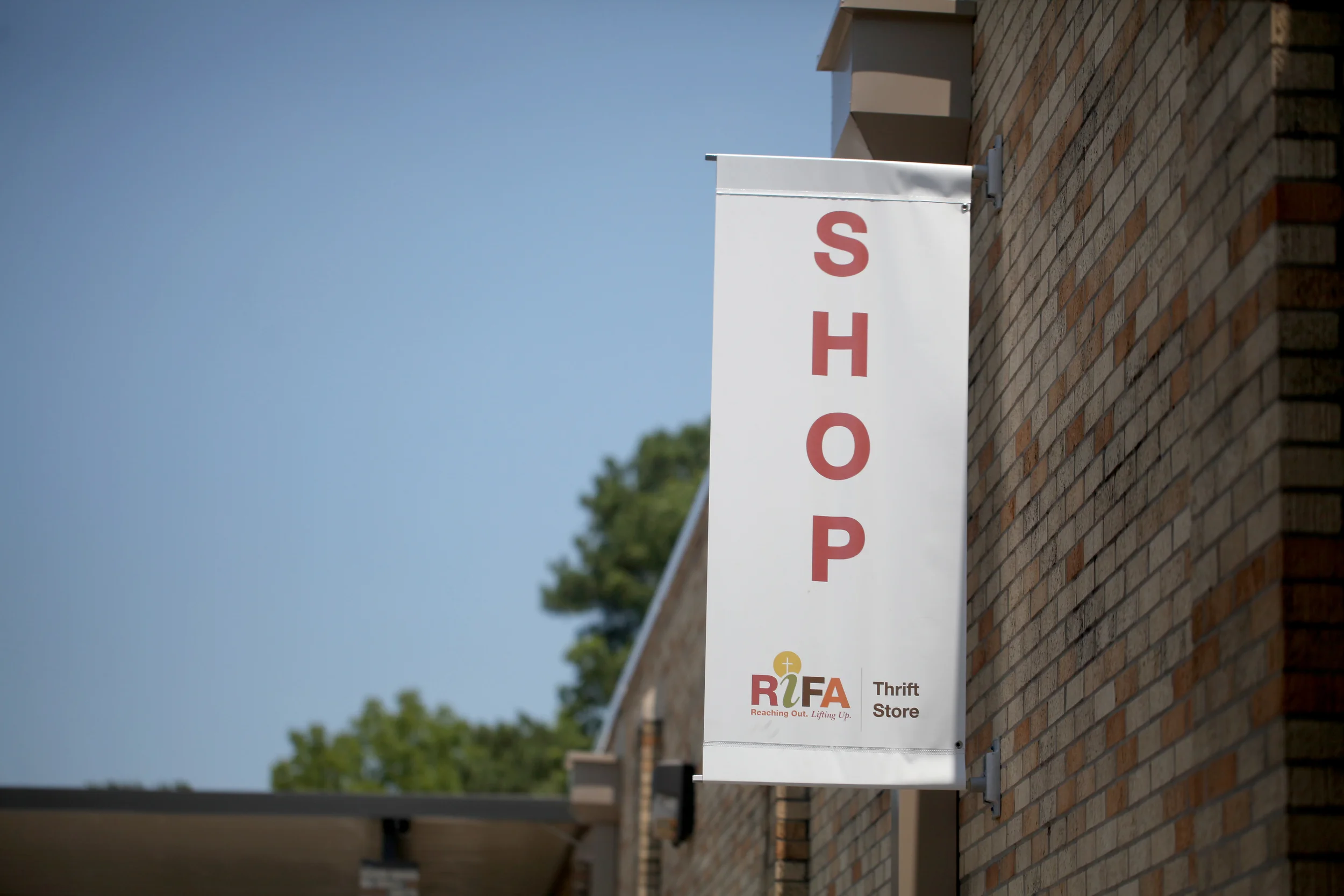
What’s better than finding an amazing deal on the perfect pair of jeans? Knowing that the money is going to a wonderful cause. That’s what you get at the RIFA Thrift Store! RIFA has had a presence in Jackson since 1976, when a group of local churches and community leaders decided to do something about the growing poverty levels in the city. The Thrift Store is one of the many ways that RIFA helps the people of Jackson, and it is open to the general public.

Caleb Hall, a student and basketball player for the JCM Cougars, won the Lane College Slam Dunk Contest at the Oman Arena Tuesday during a break between the sixteen different high schools battling in out in Area Relief Ministries’ third annual HUB Classic Basketball Tournament. JCM joined teams from North Side, Liberty, Trinity, and Madison from Jackson.
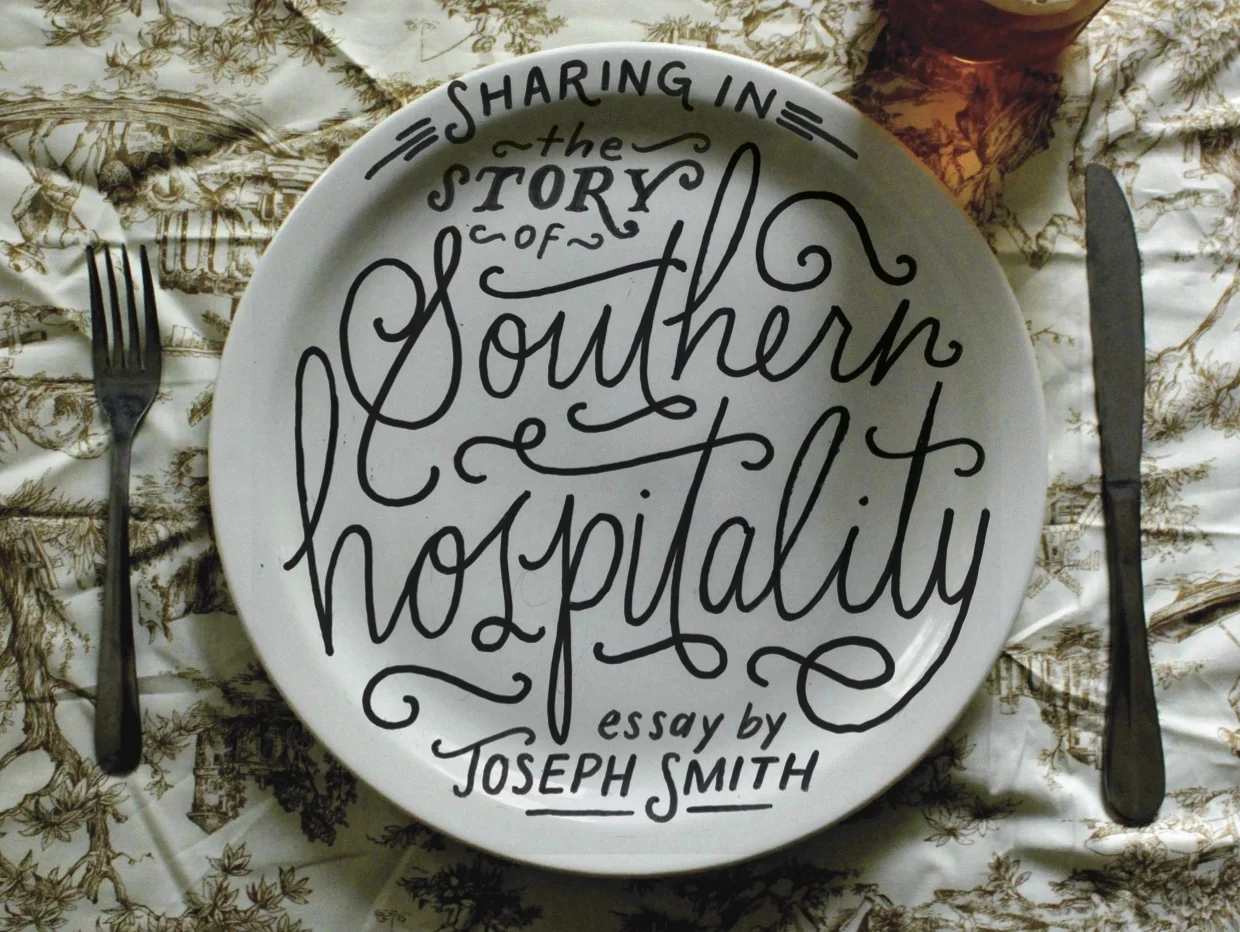
Growing up in the South has been a unique experience; my upbringing has been fostered by arguably the most distinct and well-preserved regional culture in our country, one that is often recognized and celebrated for its pride in tradition by visitors and (definitely) natives alike. It’s hard to deny how significant the carryover is from generation to generation, whether we’re talking about our carb-loaded homemade recipes, the always-charming accent, or that trademark sweet tea.
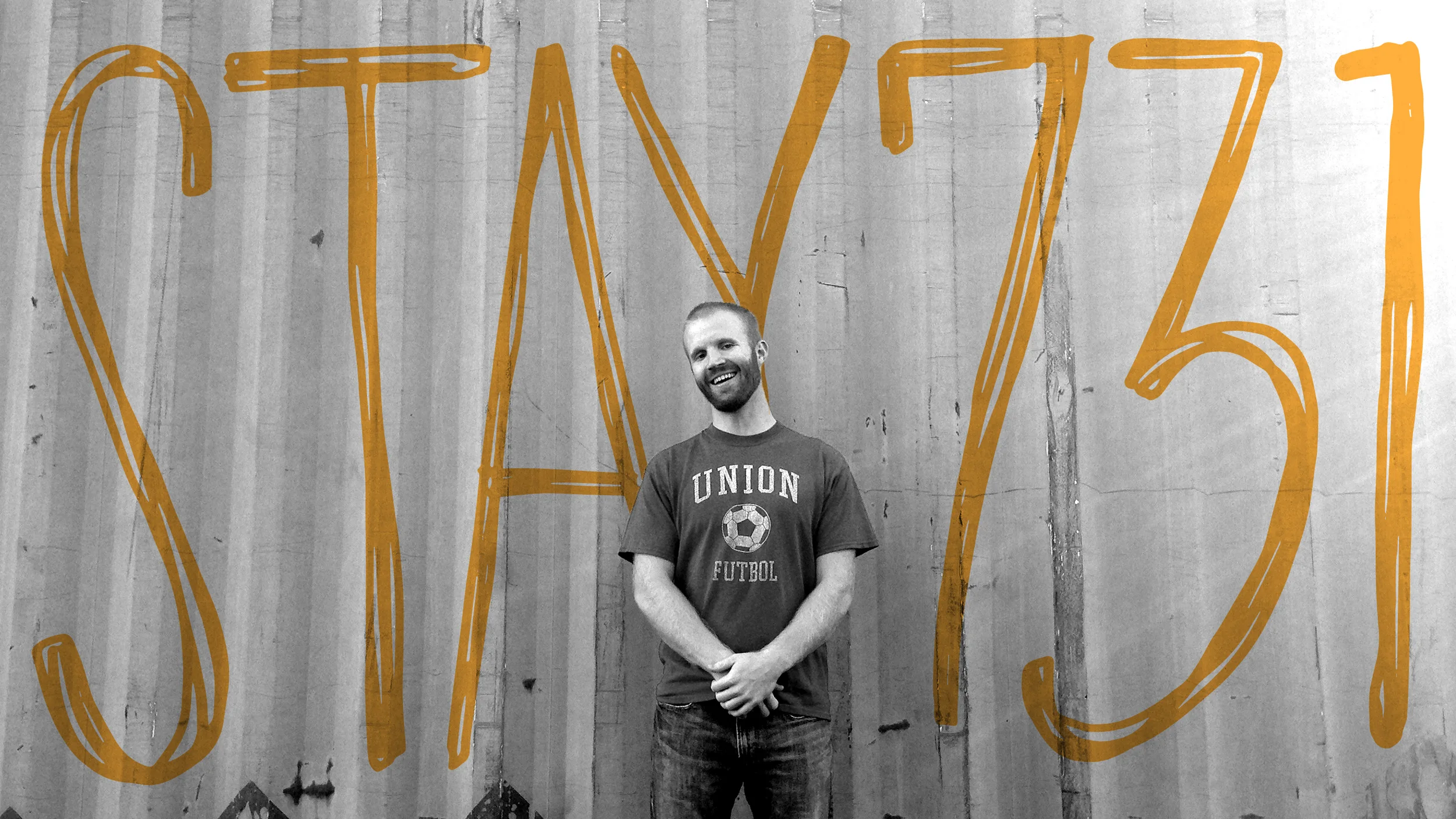
Familiarity. That would be the first word that comes to mind when I think about why my wife and I stayed in Jackson following our marriage. For one, I was still enrolled at the University of Memphis and taking night classes at the old Lambuth campus. I was also in my third year of working at Green Frog Coffee Company, and my wife had gotten a job at Union after graduating from there.

Back in December I was praying and dreaming about what 2015 would hold. I was standing on the cusp of one of the biggest years of my life so far. I was a senior social work major at Union University with only one more semester left of traditional undergrad, and I thought I knew everything as all good college students do. I had secured a great internship with RIFA and was greatly looking forward to what that would teach me.
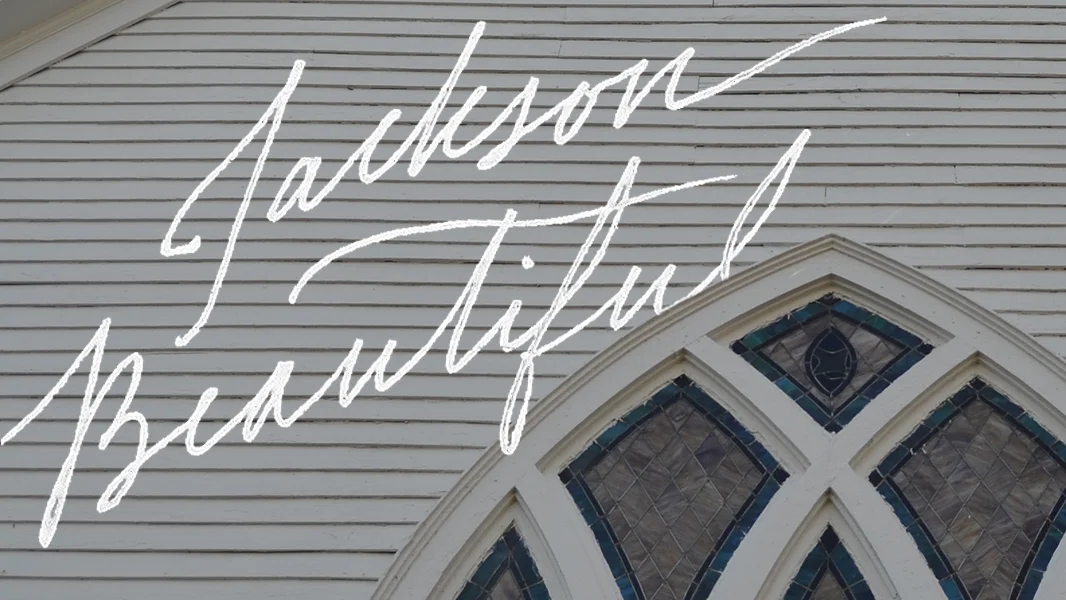
The greater the idea the more beautiful the building—a statement that should be true, and is true in an abstract sense. The most beautiful manmade space I have ever entered is also one inspired by what I consider to be the greatest idea.
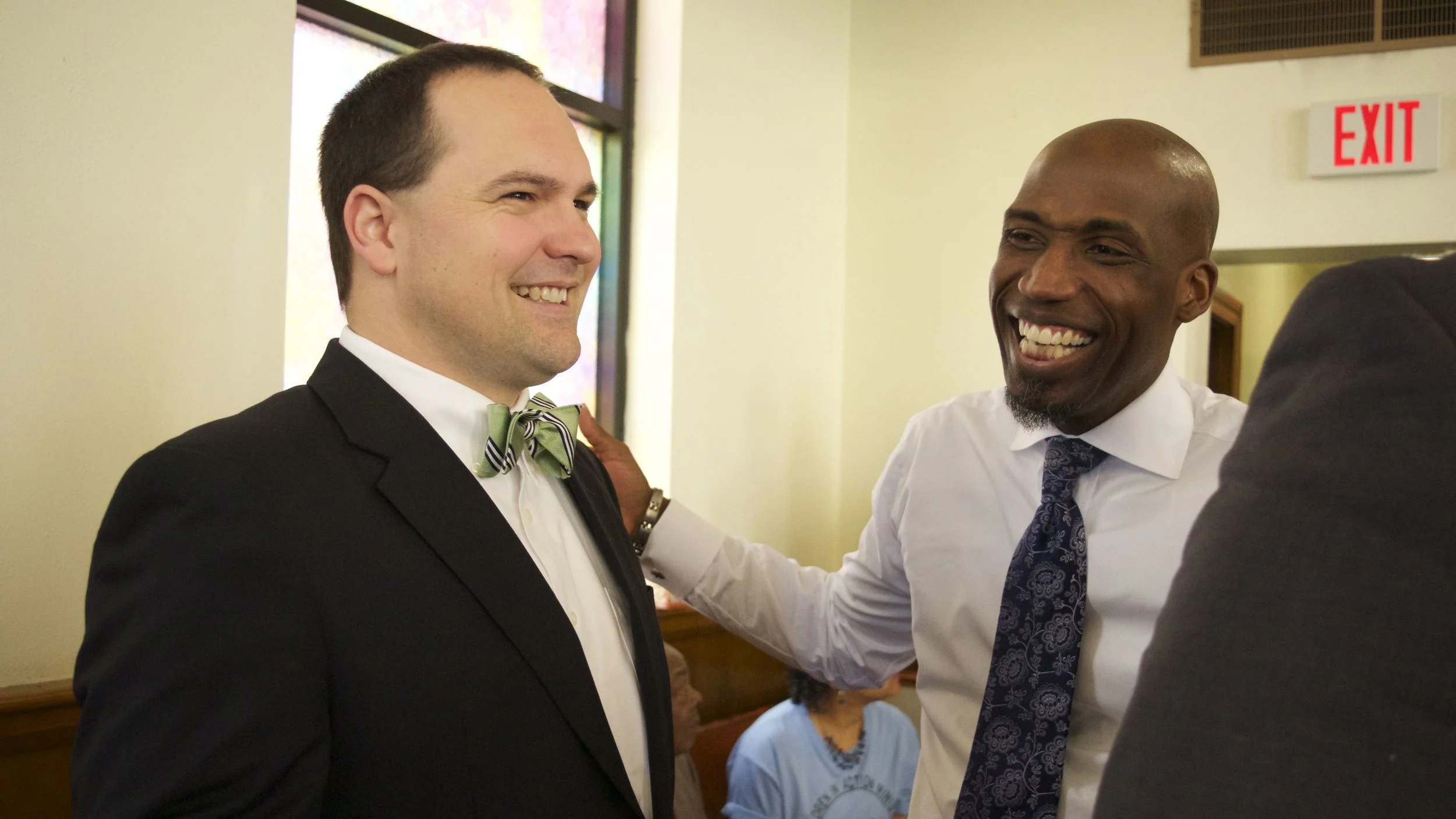
On Sunday, March 29, 2015, three congregations gathered to worship together as one, focusing on their opportunity to unite and partner together in Christ. City Fellowship Baptist Church's Pastor Russ Pflasterer preached at the service, and First Baptist Church met at 433 Dr. Martin Luther King Jr. Drive, the home of Historic First Baptist Church and Pastor William Watson. Kevin Adelsberger attended the service and was able to skillfully photograph the moments below.