
Sam Weatherford: The Puppet Is Only the Beginning
Written by Shelby Tyre
Photographed by Ontoni Reedy
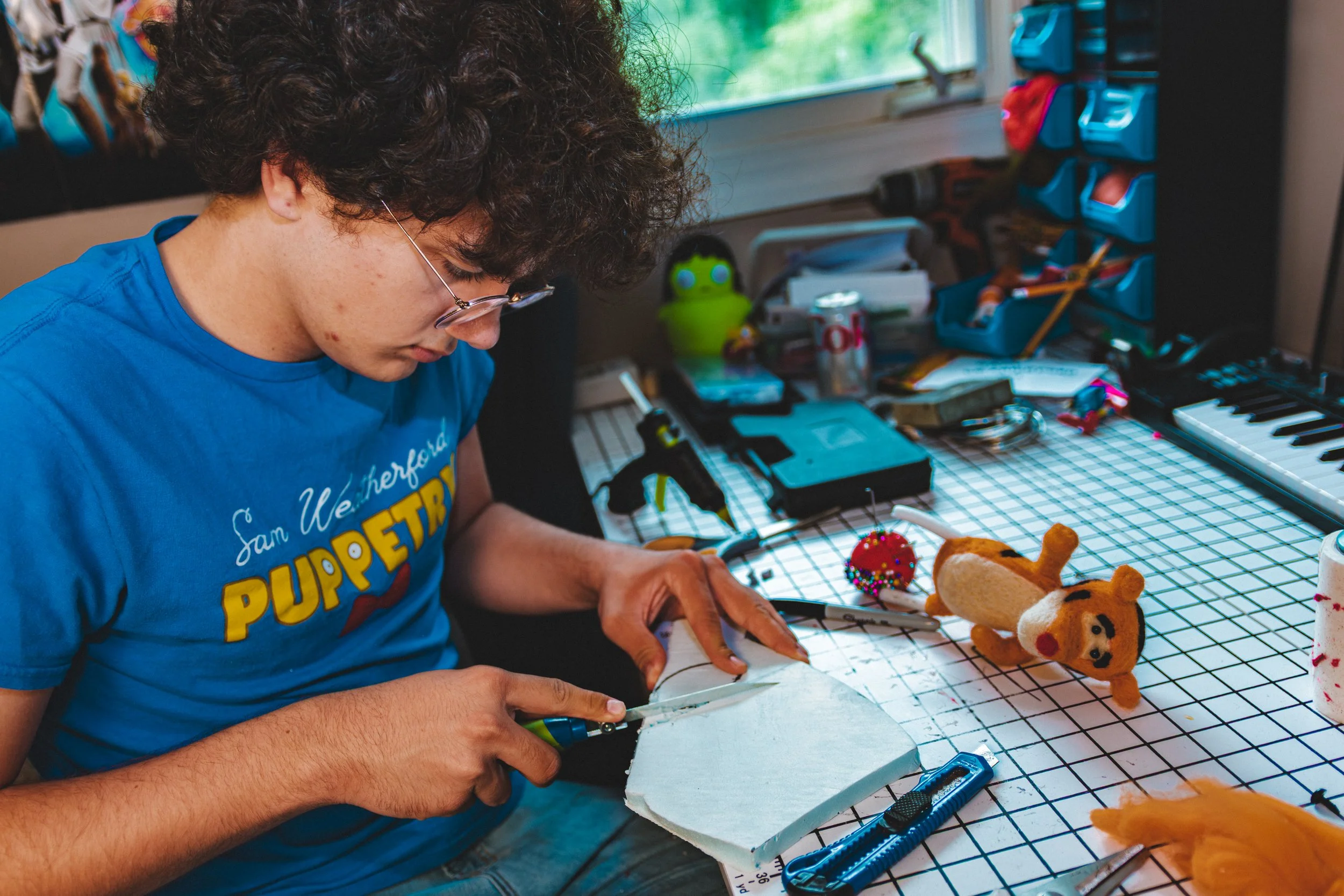
“You can always tell when I’m working on a puppet because my room looks horrible,” Sam Weatherford said. “It’s like somebody blew up ‘Sesame Street.’”
It's an image that feels fitting for Sam, whose room is often covered in fur, foam, feathers, fabric scraps, and half-finished characters waiting to come to life.
To know Sam Weatherford is to know passion. Passion for joy, individuality, performing, and creating worlds where nothing existed before. At just 17 years old, through Sam Weatherford Puppetry, he creates handmade puppets for theater productions, children's events, storytimes, and original performances. While many teenagers may still be figuring out what they want to do, Sam has already built an artistic practice entirely his own. One that combines theater, storytelling, design, and community engagement. Handmade not only by skill, but by heart.
What began with childhood fascination inspired by "Sesame Street," "Bear in the Big Blue House," and other puppet-filled worlds has slowly grown into an entire universe of his own. A process that often involves trial and error, piles of fabric, glue, thread, etc.
That passion for puppetry eventually found its way from Sam’s bedroom floor to Jackson stages.
For Sam, Jackson’s creative community played a major role in turning a hobby into something larger.
He credits many of the people around him for helping him find both opportunities and confidence as an artist. One of his first major opportunities came through The Ned, a cultural arts center in Jackson, while working on "Cinderella", where he was asked to create handmade puppets for the production’s mice, dove, and cat characters. Suddenly, the puppets he had once been making alone in his room were being performed live onstage by young actors.
“That was when I realized the puppet thing could go as far as I wanted it to go,” Sam said.
Since then, his work has continued to appear throughout the community through productions with organizations like Catbird Studio and the Imagination Library, including "A Winnie-the-Pooh Christmas Tail," a project that combined many of the things Sam cares most about: storytelling, collaboration, childhood wonder, and live performance.
"There’s no barrier to entry for being an artist and creator," he said.
Sam specifically points to mentors and collaborators who encouraged him to keep creating, including Alice Hardin, David McCall, Tisha Ewing, and many others whose support helped open doors and provided opportunities to bring his work into the community. What began as a personal passion became something shared.
"Artists want to see other artists succeed," he said. "I think that’s super important. People taking the things they love to do and coming together to make something positive."
But for Sam, puppetry is about far more than entertainment. The magic of puppetry has always been tied to something larger than performance itself. It’s about creating experiences people remember. That same sense of wonder is something he now hopes to pass on to younger audiences through his own work.
“I want kids to be inspired,” he said. “I think that’s the most important thing about childhood.”
And perhaps that's the real magic of Sam's work. The finished puppet is only the beginning. Once a character steps onto a stage, into a library, or into a room full of children, fabric and foam become something else entirely. A child isn't meeting a puppet. They're meeting Winnie the Pooh. They're listening to Stitch tell a story. They're stepping into a world that feels real, if only for a little while.
“When you make media that’s for kids, you’re shaping people,” he said. “I want whatever they’re consuming to inspire them to know that they can be whatever they want to be.”
That sense of inspiration begins long before an audience ever sees one of his creations. For Sam, the process is less about following a set formula and more like solving a puzzle. Before a single piece of fabric is cut, he spends time studying shapes, watching what experts and other puppeteers have created, sketching ideas, and figuring out how a character should move. Puppet mouths are often made from repurposed plastic tote lids, bodies are sculpted from foam, and every detail must be considered long before the final character takes shape. In an era increasingly shaped by artificial intelligence and digital creation, Sam believes there is still something irreplaceable about making something with your own hands. Each puppet carries small imperfections, creative choices, and human touches that make every character uniquely its own.
“As soon as the eyes hit the puppet, I’m like, ‘Oh, I know this guy.’”
The final step isn't simply finishing a project; it's meeting the character for the first time.
But for all the characters he brings to life, one of the most remarkable things about Sam is who he is when the performance ends. Spend enough time around Sam, and you begin to realize the qualities that make him a compelling artist are the same qualities that make him memorable as a person.
I first met Sam while assistant directing “Hadestown: Teen Edition” at The Ned. From the moment rehearsals began, he carried himself with the same quiet intensity and thoughtfulness he brought to the role of Hades. He wasn’t loud about his talent, but it was impossible to miss.
As rehearsals continued, I began seeing more and more of the person behind the character. Someone deeply creative, observant, and kind in a way that feels increasingly rare.
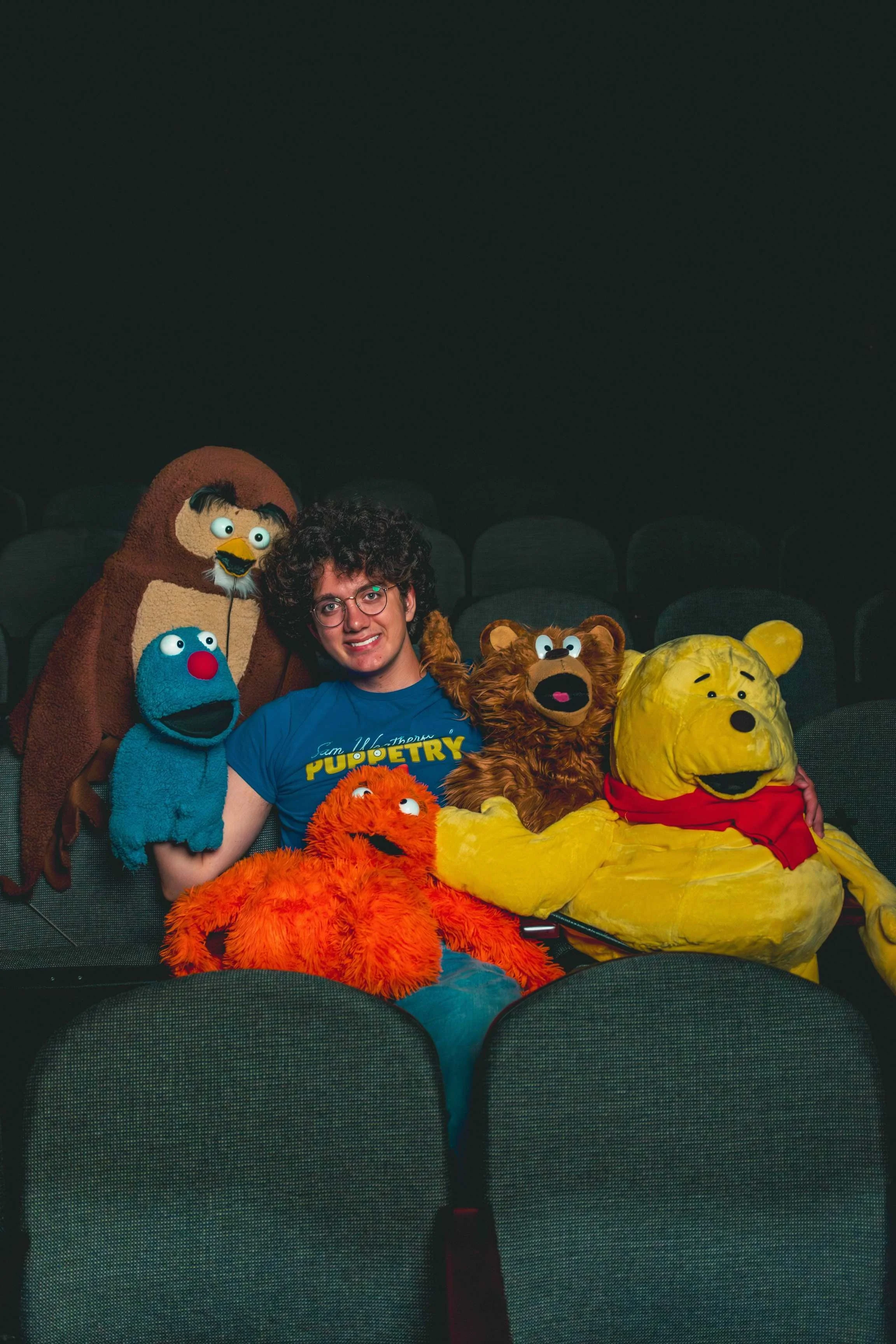
Then came the final show. Before every performance, I made my way through the cast, giving everyone fist bumps before places were called. That night, instead of a fist bump, Sam pulled me into a big hug. It was a small moment, but one that has stayed with me. Behind all the artistry, puppets, performances, and creativity is simply a kid with a huge heart and a genuine love for the people and community around him.
There’s something deeply refreshing about watching someone so young move through the world so unapologetically as themselves.
For anyone hesitant to start creating something of their own, Sam's advice is simple: "Make it. Worst-case scenario, you have a puppet."
As Sam prepares to attend the University of Memphis this fall to study theater performance, he says puppetry will continue to be a part of whatever comes next.
While college will bring new opportunities, new collaborators, and new stages, his long-term vision remains much the same: creating meaningful work, building community, and inspiring others to create alongside him.
I've often asked Megan Weatherford, Sam’s mother, how she raised such remarkable kids. Truly, all of the Weatherford children are uniquely themselves. Creative, thoughtful, kind, and completely unafraid to take up space. During my conversation with Sam, she offered a simple explanation.
"I just let them be whoever they want to be," she said.
Maybe that's part of what makes Sam's work resonate. Every puppet begins as little more than an idea, a pile of materials, and the freedom to become whatever it is meant to be. Through patience, imagination, and a willingness to try, something entirely new emerges. In many ways, that philosophy extends beyond puppetry.
It's the same lesson Sam hopes to instill in young people and, honestly, the rest of us too, that creativity isn't reserved for experts and that sometimes the only way to discover what you're capable of is to follow your passions and have the courage to keep going.
(And maybe a lot of fur.)
To learn more about Sam Weatherford Puppetry and to hear about upcoming projects or events, follow him @samweatherfordpuppetry on Instagram.