
Standing the Test of Time: What It Means To be a Craftsman
Written by Olivia Kirk
Photographed by Colton Creasy
I thought about starting this piece with a line about the overwhelming smell of sawdust in the shop or the calluses that develop on the palms of any self-respecting woodworker after years of crafting things with their hands. I also thought about starting it by describing the feeling of walking into a place where work happens, but without desks, cubicles, laptops, or Google Calendar. But instead, I want to begin with a fact about trees, because that’s exactly how my conversation with Bryce Miller and Chris Deming began.
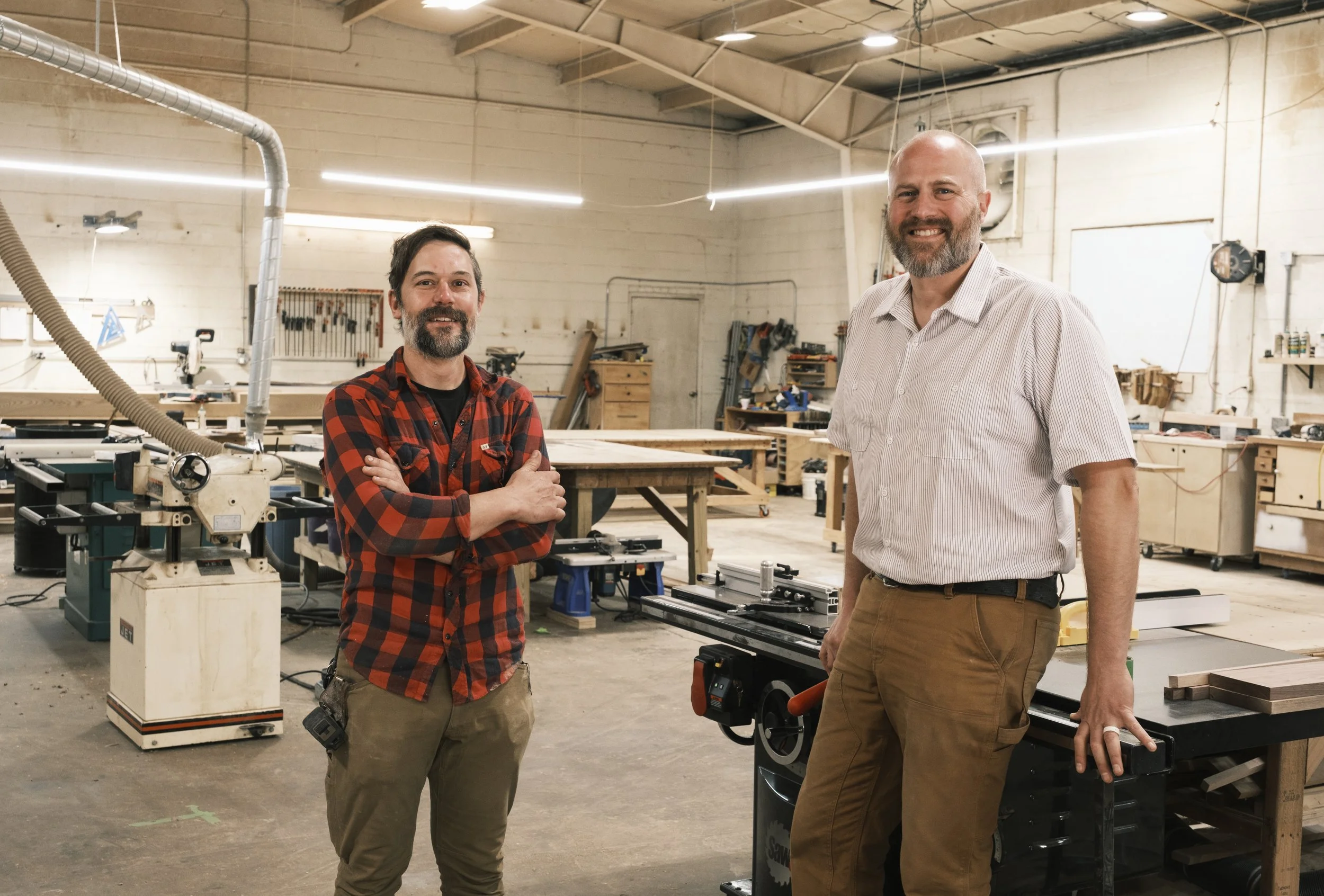
While Bryce and Chris, fellow woodworkers and business owners, gave me a tour of the shop they share in downtown Jackson, they showed me nearly every piece of wood that you could imagine exists. I learned about pine, white oak, cedar, softwood, and hardwood. If you can name it, they probably had it. But the thing that stood out the most to me was the fun fact they shared about a process called tree grafting.
Tree grafting is a technique mainly used on fruit trees where two different kinds of trees are fused together. It’s done by taking a branch from one tree and wrapping it tightly to the branch of another so that one tree is able to produce multiple kinds of fruit.
I’ll spare you the science behind it (it’s not something I fully understand anyway), but it’s one of those miracles of nature that you can’t help but marvel at when you see it. While Bryce and Chris showed me a piece of wood that you could tell had been grafted, it was the moment I realized that these two men are more than just craftsmen. They are experts.
Both of them shared the stories of how they got into woodworking, and each began with two things you might expect: they grew up around it, and they love working with their hands.
“I applied for a bunch of apprenticeships all over the country. I ended up in Iowa in a shop where they only used the tools that they would have had in 1875,” Chris said. “I spent a year up there learning how to build furniture using old handsaws and old hand planes. I did that for a year, and then I came back and I worked for several cabinet makers in the Nashville area for about four years.
After Chris moved back to Jackson to be closer to family, that’s when he began Art & Mystery Woodworks.
Bryce’s story is similar.
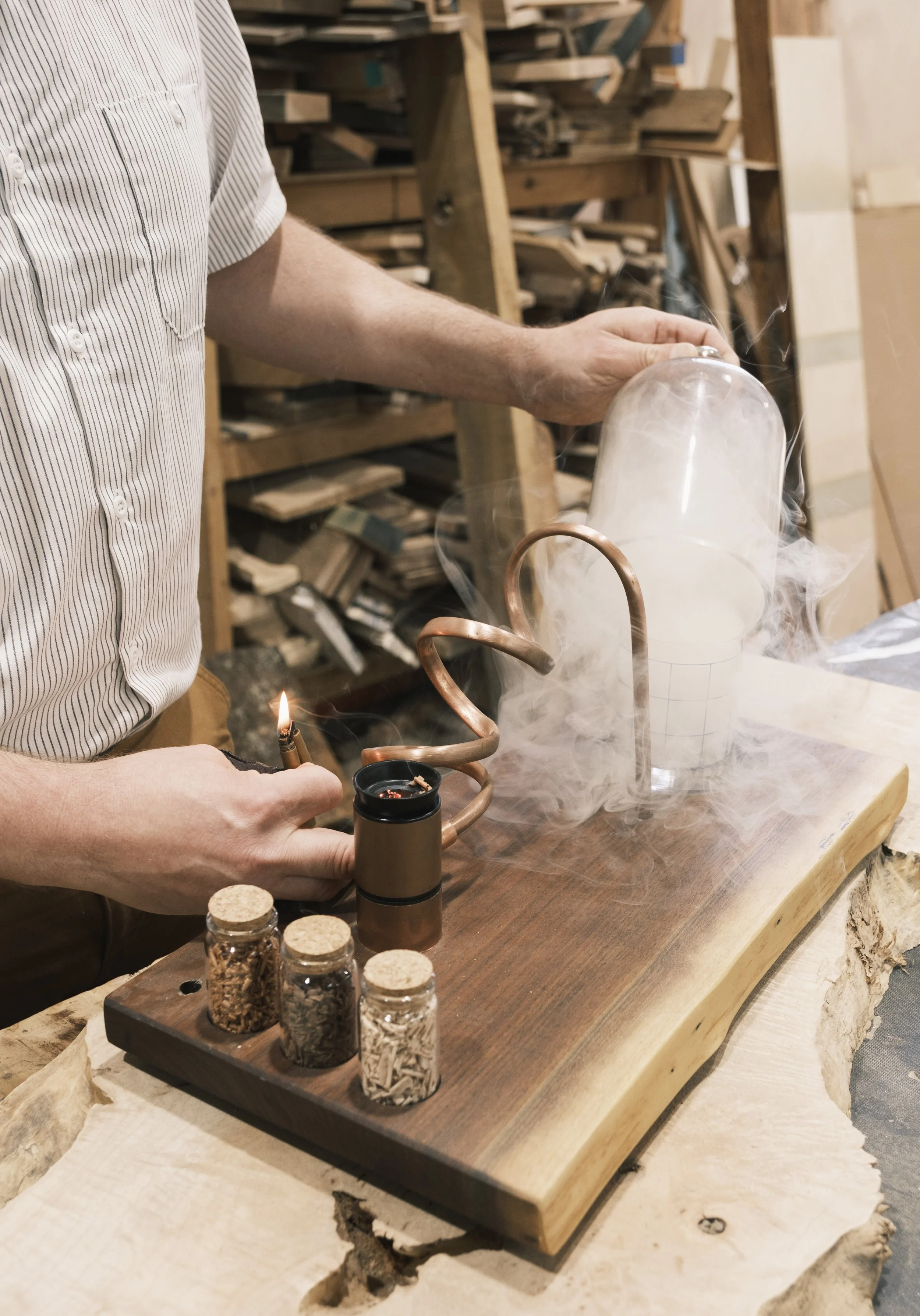
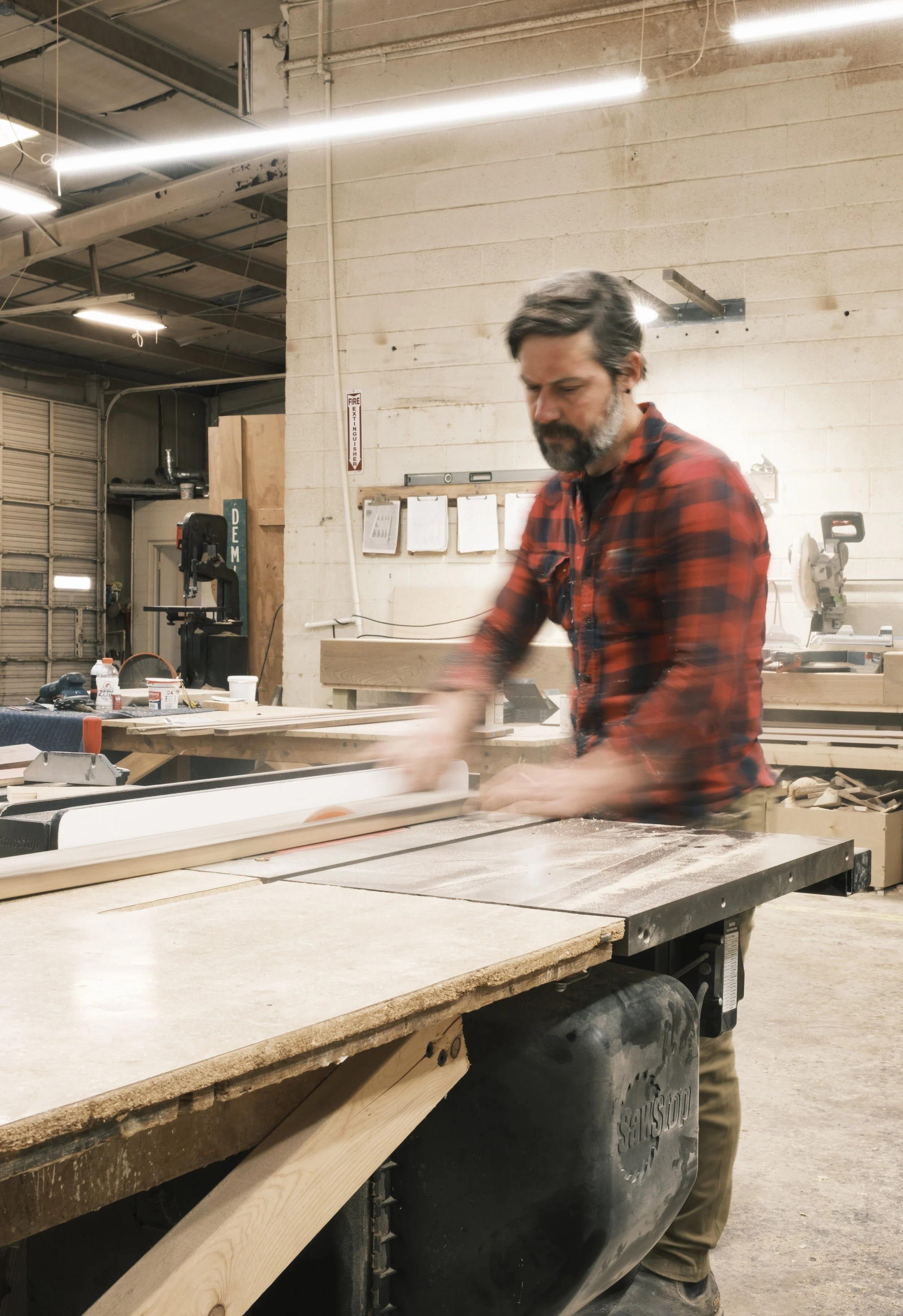
“Out of everyone in my family, my grandmother was actually a furniture maker,” Bryce said. “I grew up watching her make furniture, and my great-uncle is a premier cabinetmaker up in Northwest Ohio. I grew up around woodworking my whole life, and I've always been interested in it.”
Bryce explained that he went to college for graphic design and photography and how that eventually led him to woodworking as he searched for a new career after 2020. He began his own woodworking business, Earthborne Goods, shortly after.
Bryce and Chris explained that for woodworkers, there really are two main paths to learn this kind of trade.
“If you want to build high-end, really good furniture, a lot of guys will go for training. A lot of guys will also just bang their head against the wall until they know how to do it,” Chris said.
Woodworking isn’t one of those things you pick up and are immediately good at, at least not for most. Instead, it takes hours of messing up and trying again and practicing until you’ve started to do just one thing right.
“It’s the rule of the 10,000 hours, that as soon as you put 10,000 hours into something, you become masterful at that craft. Especially being around each other, I glean a lot of information off of Chris, and he gleans nothing off of me,” Bryce laughed. “But by the same token, we both have a little set of knowledge that we can work off of. Then, the more you do something, the more you become competent at it.”
This is something Bryce and Chris try not to take for granted when it comes to working in a shop beside another woodworker with similar, yet vastly different skills. They don’t see one another as competition. Instead, they believe iron sharpens iron.
“We both have pretty different focuses, but at the same time, we do cross over quite a bit. Chris is much more known for cabinetry and furniture making, and I do different things. He can do everything that I can do, but it's just different,” Bryce said.
With Bryce’s design background and Chris’ history with cabinetry, each of them has something unique to offer to their craft and to each other. Because of those skills, the work they make is as good as art.
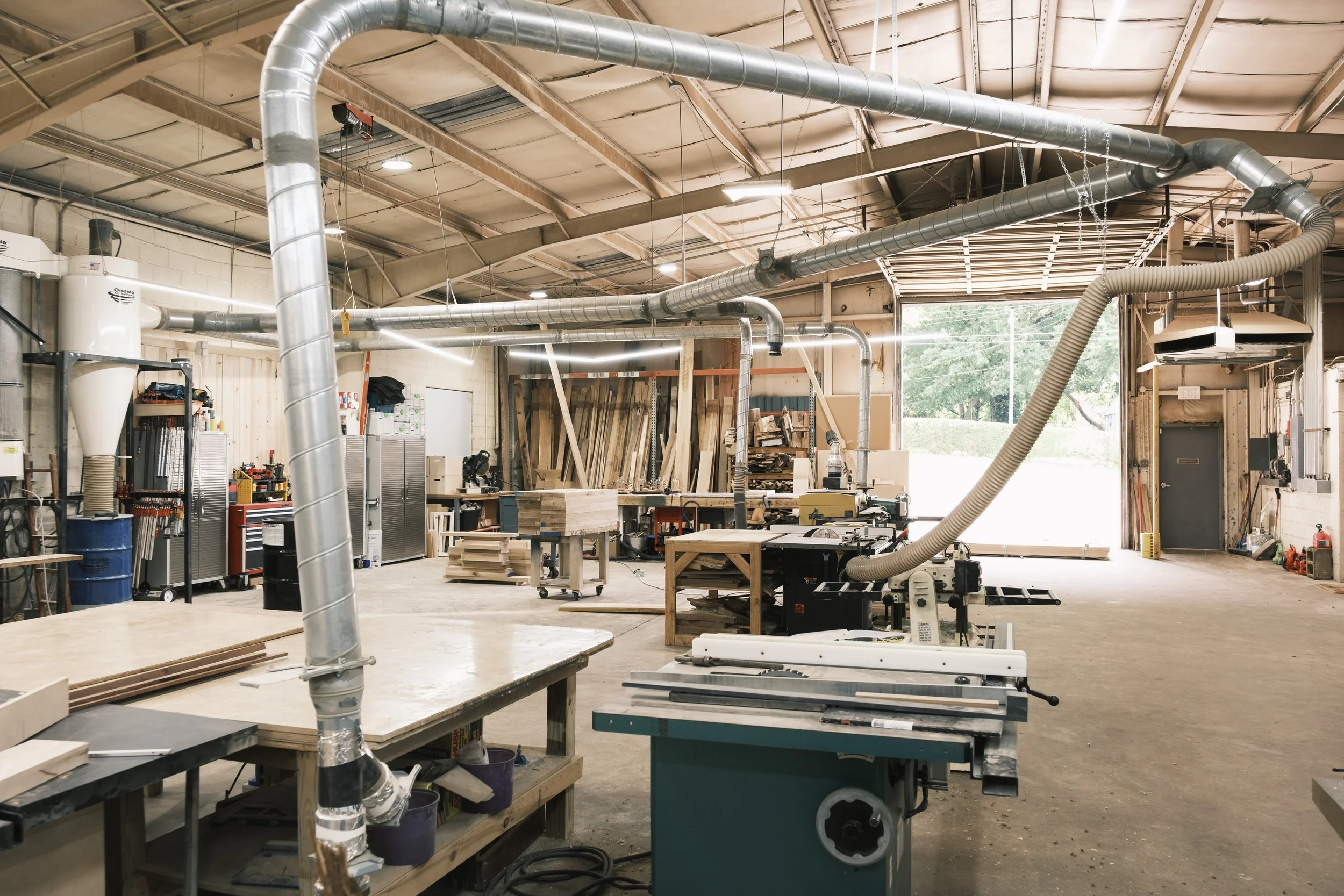
To many, including several business owners in Jackson who have adorned their shops and restaurants with things made by both men, the art they make is also worth paying for.
“Working with these local business owners, they have a dream, a vision. I meet with them, and then we're able to come up with something that they can't find on the internet. They haven't seen it yet,” Chris said.
From storefront counters to handmade signs hung outside and every little project in between, both woodworkers have had a hand in creating the bits and pieces that make up some of Jackson’s favorite places. And more, Bryce and Chris have also built things for so many homes around our city that will stand the test of time.
“I think one of my absolute favorite things to build is a dining table. Every time I build a dining room table, I'm thinking about the table, of course, and I'm thinking about what the person wants, but I'm also thinking about ‘How many family meetings are going to happen on this table? How many Thanksgivings are going to happen on this table? How many birthdays?’ I think it's important to think about those things because it makes you a better craftsman and it makes you want to do a better job,” Chris said.
As I walk into a local woodworking shop like Bryce and Chris’s, it’s easy for me to say that I’d choose the handmade coffee table for my living room over the $100 one I found while scrolling through Amazon. However, I’d be naive to say that this isn’t a battle we all fight daily. In a world of fast fashion, there’s also “fast furniture.” But as we all know, those “come in a box and put it together in three quick steps (or 300 quick steps)!” pieces of furniture probably won’t last one move across town, let alone still be standing in another 50 years
“One of my favorite pieces of furniture that I have in my house is something my father built. It's standing the test of time. That's just a testament. He built that in the mid-’60s. What a true mid-century modern piece I have, and it's from my dad, which makes it so important,” Bryce said.
In a culture obsessed with convenience, Bryce and Chris have thought about longevity. They think about the dining room tables and those family memories. They think about the bookshelves and cabinets that will be repainted, fixed, and refinished instead of replaced. They think about the son or daughter who will point to something in their home one day and say “My dad built that.” They think about the fact that in a few years, the things they make will probably be considered antiques and that many of those things will become part of the history of that place.
Maybe this is what separates furniture from craftsmanship. One is there to fill an empty corner in a room, and the other stands the test of time.