
Woolfolk Farms: The Seven-Generation Legacy of Hardworking Hands
Written and Photographed by Maddie McMurry
In the midst of the summer, the memories of the winter storm we had this past year have started to slip my mind. I forget how we were all going a bit stir-crazy in our home for those two weeks, how the schools were canceled, how my neighbors and my husband were out on our hill-of-a-road scraping away totry and get our cars out. We thought we had it rough; we sure liked to complain.
But what a privilege it was to complain about being stuck in our homes.
I sat down with Scott Woolfolk, one of the owners and the current operator of Woolfolk Farms, the 161-year-old cattle farm here in Jackson. His perspective changed my outlook on that once-in-a-lifetime ice storm we all experienced. His day-to-day was much more grueling than mine. It involved thinking weeks ahead, heating their barns to keep the tractors warm, and stocking up on food for the over 300 cattle he cares for. Each day, in the freezing cold and ice, he would have to make an 8-mile journey in a side-by-side and tractor to check on the cows, feed them, and bring them water.
"You got to go feed them, you got to go take care of them. You can't just say, 'Hope they're alright.' That two weeks was the worst I've ever experienced. Everyone fusses because they had to sit in the house... I wish we could've sat in the house," Scott explained as he retold the story to me.
The one thing Scott continually said is overlooked in the cattle farming business is how much hard work and perseverance it takes. No matter the season, no matter if it's Christmas morning, every single day starts with a cattle check. 300 cows. Seven days a week. 161 years. There's no break, no off-season, no choosing to just stay in bed. Scott is quite possibly the most hardworking person I've ever met.
"99% of people don't realize that it's that time-consuming to take care of that many cattle."
It's a hard life. There's drought, interest rates, ice storms, the harsh heat of summer — good times and bad times.
And yet he said, "I wouldn't trade it for nothing."
Growing up watching his father and grandfather run the farm, there was never really another option for Scott. His parents wanted him to consider another career, but for him, it was always about carrying on the legacy of Woolfolk Farms. He's lived in the same house for over 50 years— the same home he was born in and later purchased from his parents. His father, John, still lives on the property, and Scott's two sons are both involved in the decision-making and help out around the farm. His wife, Cher, has handled the bookkeeping for years alongside her career as a schoolteacher.
Learning the cattle business isn't something you go to college for. Instead, you learn by watching.
"That's all I know. The same way my kids learned, as soon as they were big enough to walk, they followed Dad. It's just kind of a thing you learn by watching," he explained.
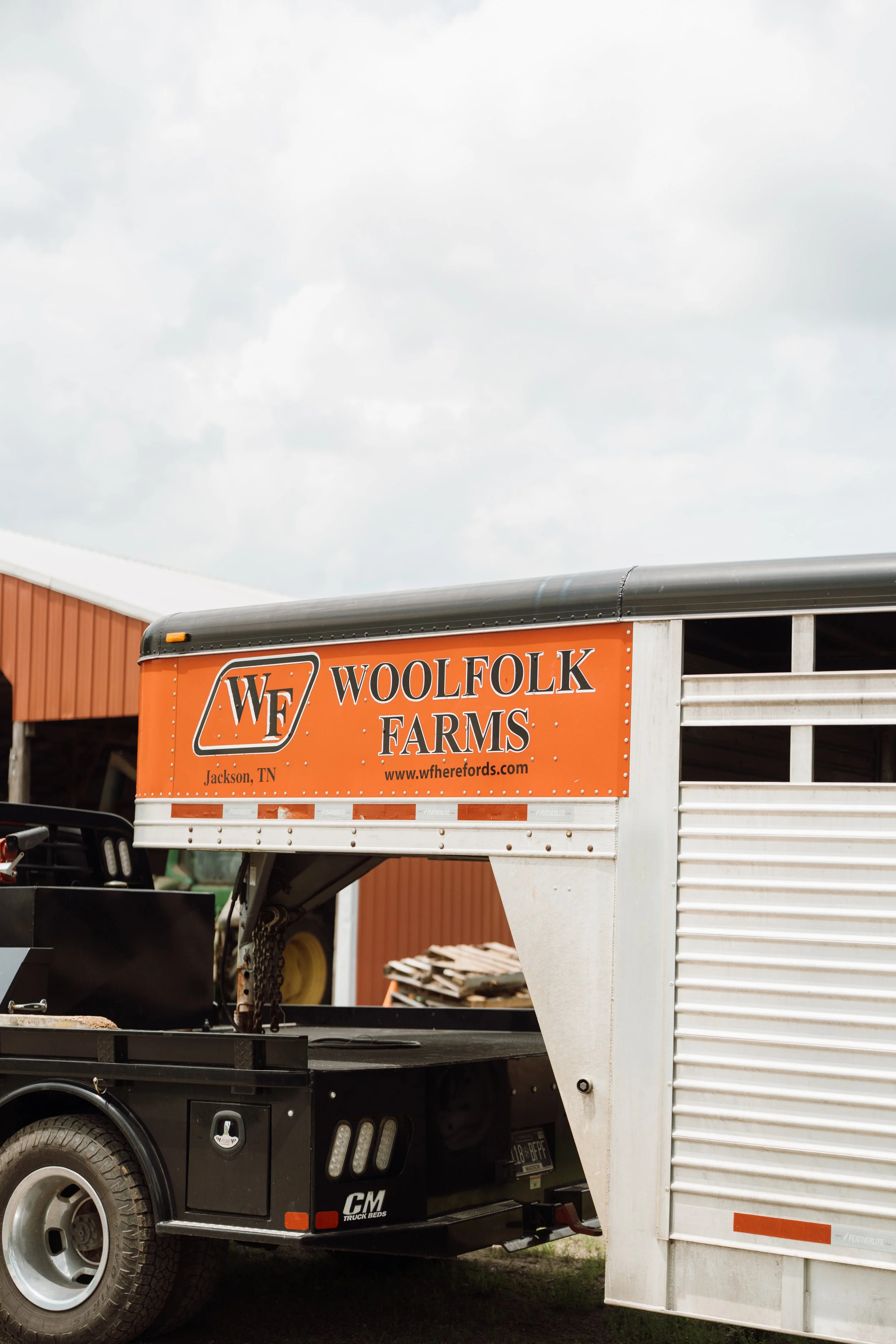
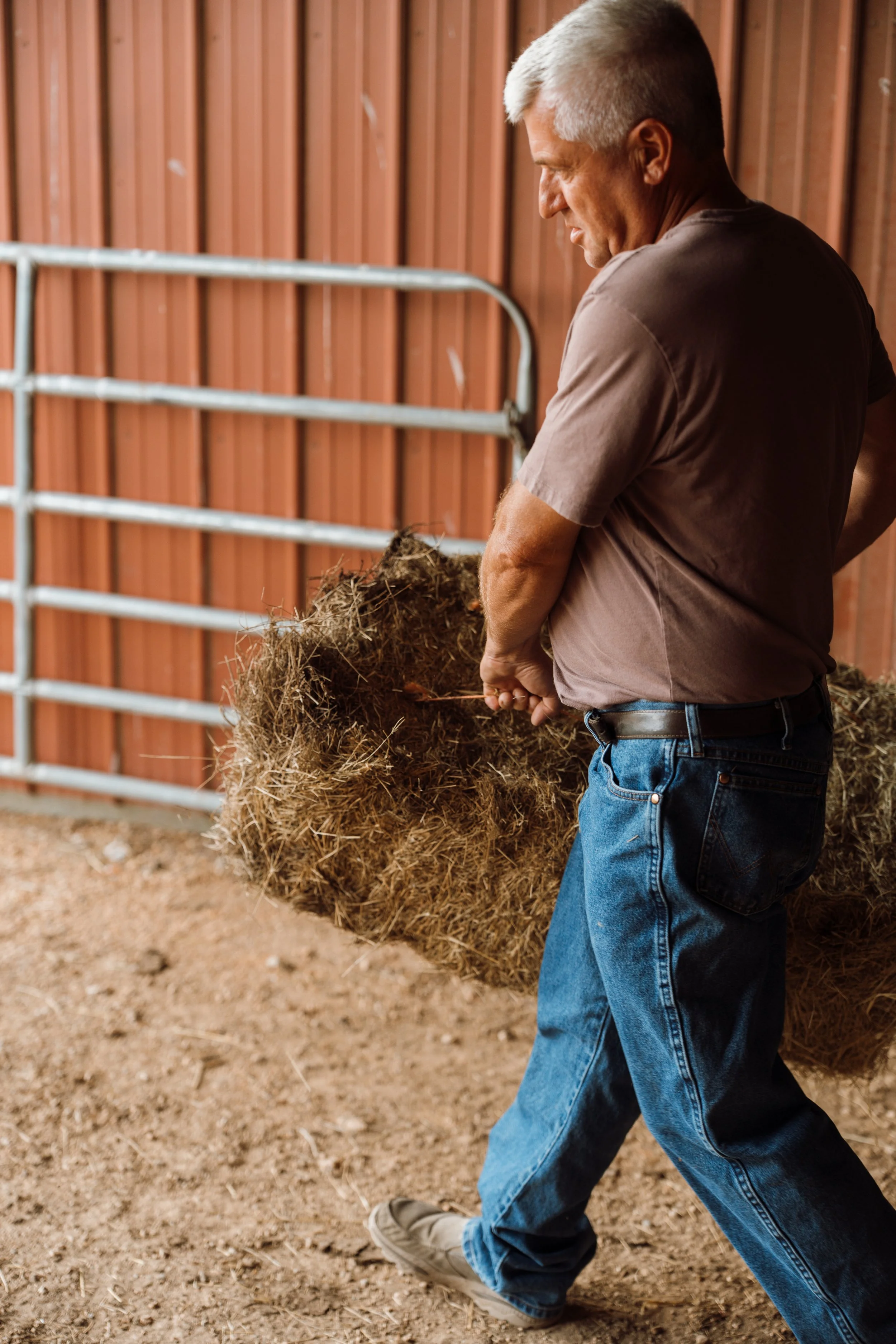
So how does a family business lasting 161 years and seven generations survive? Mostly hard work passed down through the bloodline but also diversification.
The Woolfolks branched out into the hay business 20 years ago, which helped them grow by selling hay to horse owners in the surrounding areas. They also sell freezer beef, where customers come directly to the farm to pick up locally raised beef. None of it leaves Madison County, and Scott hasn't spent a single dollar on digital marketing to build his 100-person customer base. People simply spread the word after experiencing the honest, quality work the Woolfolks do.
"People like to know what they're getting, how it's raised, and where it comes from," Scott said.
They are most well known for their registered Hereford cattle, a herd with roots stretching back to 1941 when the family purchased their first registered female from a neighboring farm. Today, those cattle have been sold into 28 states, going as far as California, Wyoming, and Canada. They've even been shipped internationally to Turkey and Kazakhstan. Through the work of their hands on their own land, people are taking a piece of Jackson into communities across the country and around the world.
"It makes you feel pretty good that they wanted to come all the way here for our cattle," Scott told me with a sense of pride.
As we were driving around and I was taking photos of the lush green pastures and the cows, I asked if there were any other spots Scott would like to show me. We joked that all the cows would just look the same in photos, but Scott replied with, "But they all look different to me."
"It's just like having 300 kids, there's something every day."
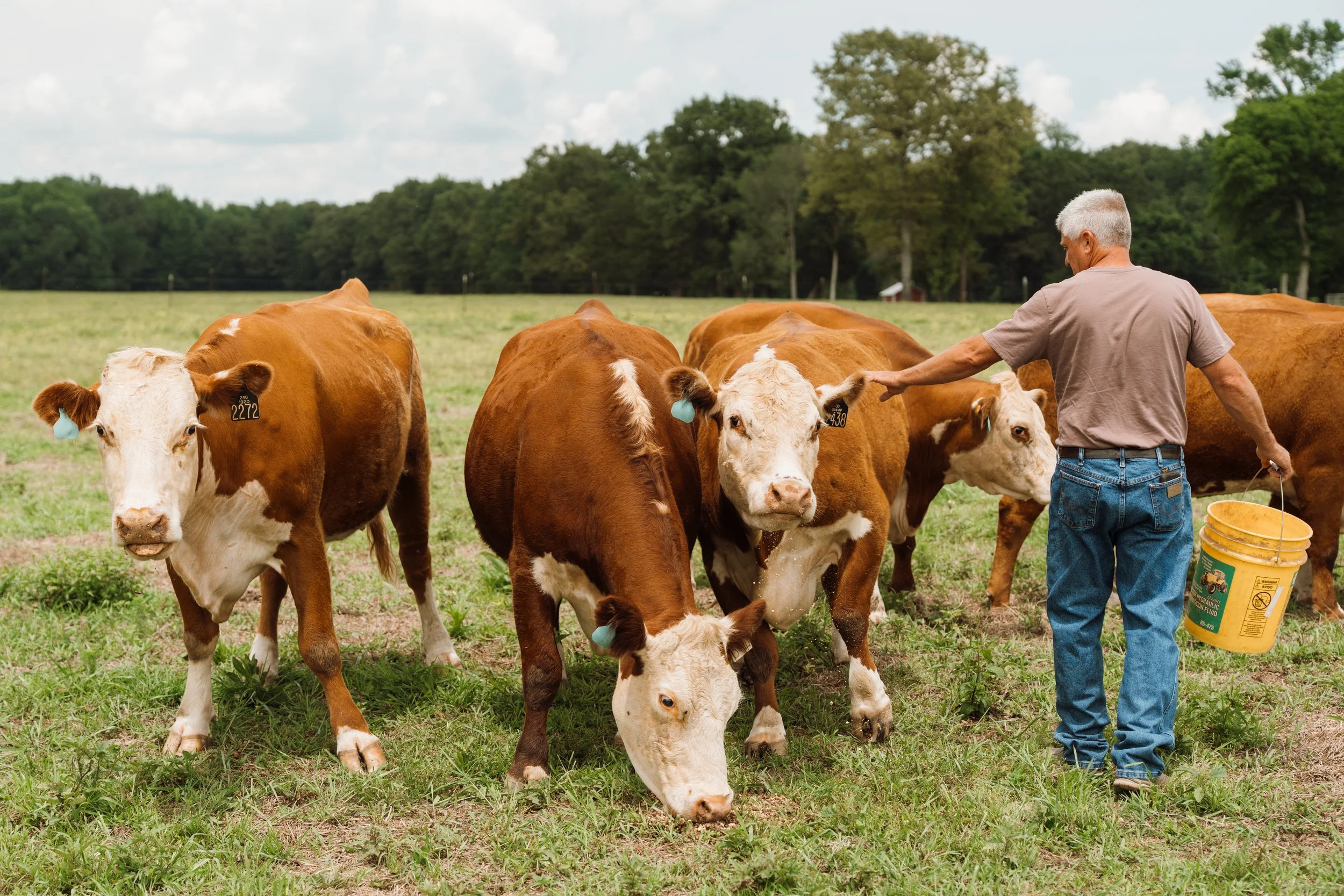
Although it is a business — and a well-oiled one at that — Scott is still caring for each cow with his own hands. He's learned to be his own veterinarian over the years, delivering calves each season and handling basic ailments as they come. Growing up on the farm, you learn how to lose cattle before you ever lose a family member.
"If you're gonna have cattle, you're going to lose cattle. You learn the excitement of birth and the agony and defeat of death at a very young age. You can't lose them if you don't have them," Scott said.
There's real truth in that — about cattle and about anything good in life. You can't lose what you don't love. Scott is grateful for the hard work, the sweat, the grief, the long hours. This legacy, recognized by the state of Tennessee in 1976 as a Century Farm, carried across seven generations and 161 years, is something special. And it's right here at our back door.
"When it's all you know and all you've ever done, it doesn't really sink in, but when you print it, people really get excited about that [generational farm] because there's not many of them left," Scott said. "Usually 2 or 3 generations is a big deal."
Scott is hopeful his children will carry the business forward one day. Cattle raised by hardworking hands, right here in Jackson, and making their way across the country and the world.