
Everyone’s Invited to the Parade: The Creation of the Newest Sidewalk Mural in Downtown Jackson
Written and photographed by Maddie McMurry
The first thing you notice now as you round the corner at East College Street is the color. Vivid, joyful, undeniably alive. It spills across the concrete in front of the Carnegie Center for Arts and History like a secret that's been waiting to be told. It increases foot traffic. It makes drivers slow down. It makes people smile without quite knowing why, at least until they crouch down and really look.
That’s the whole point of the newest piece of public art for our city: to make you look, slow down, and continue on to see what The Carnegie has inside.
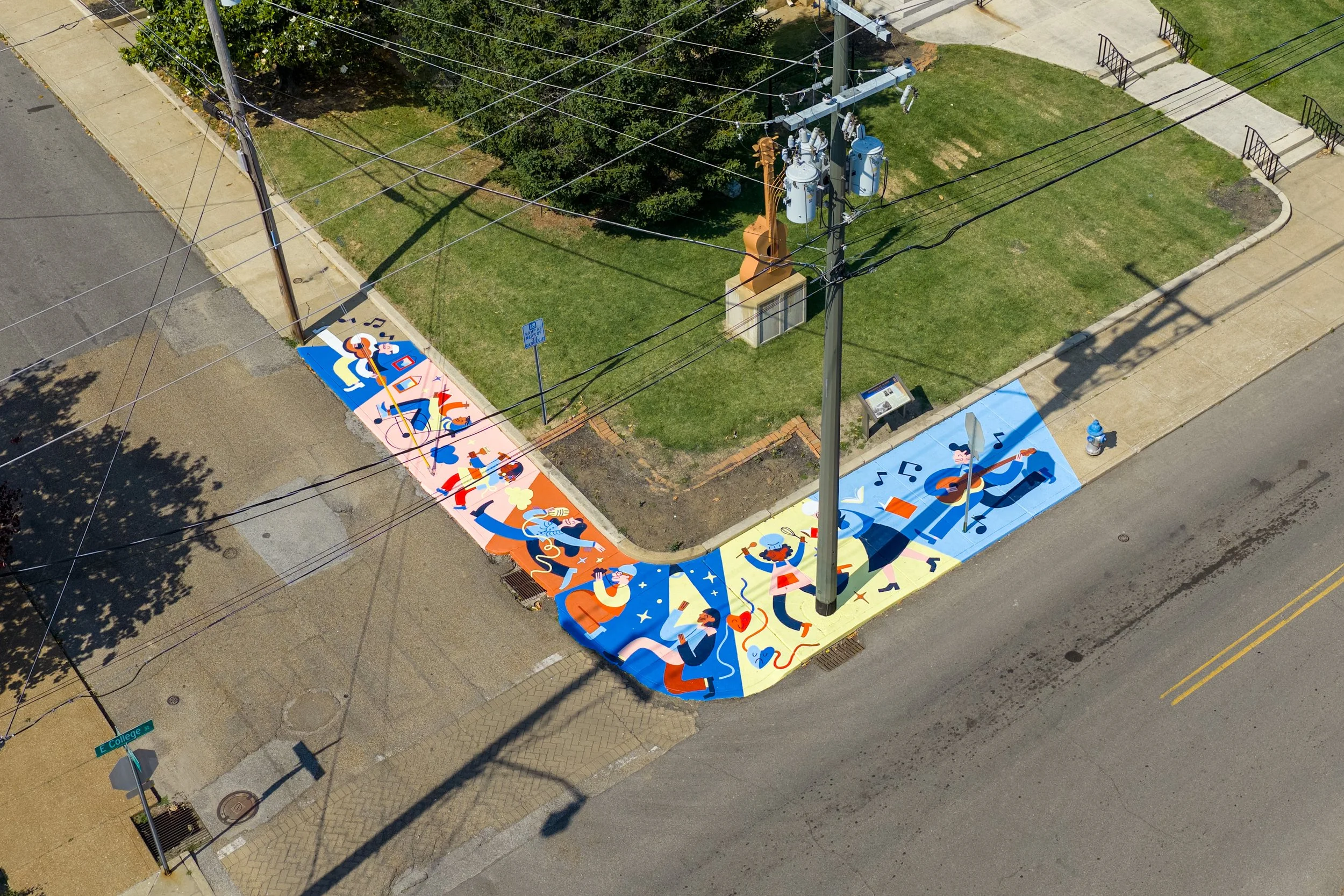
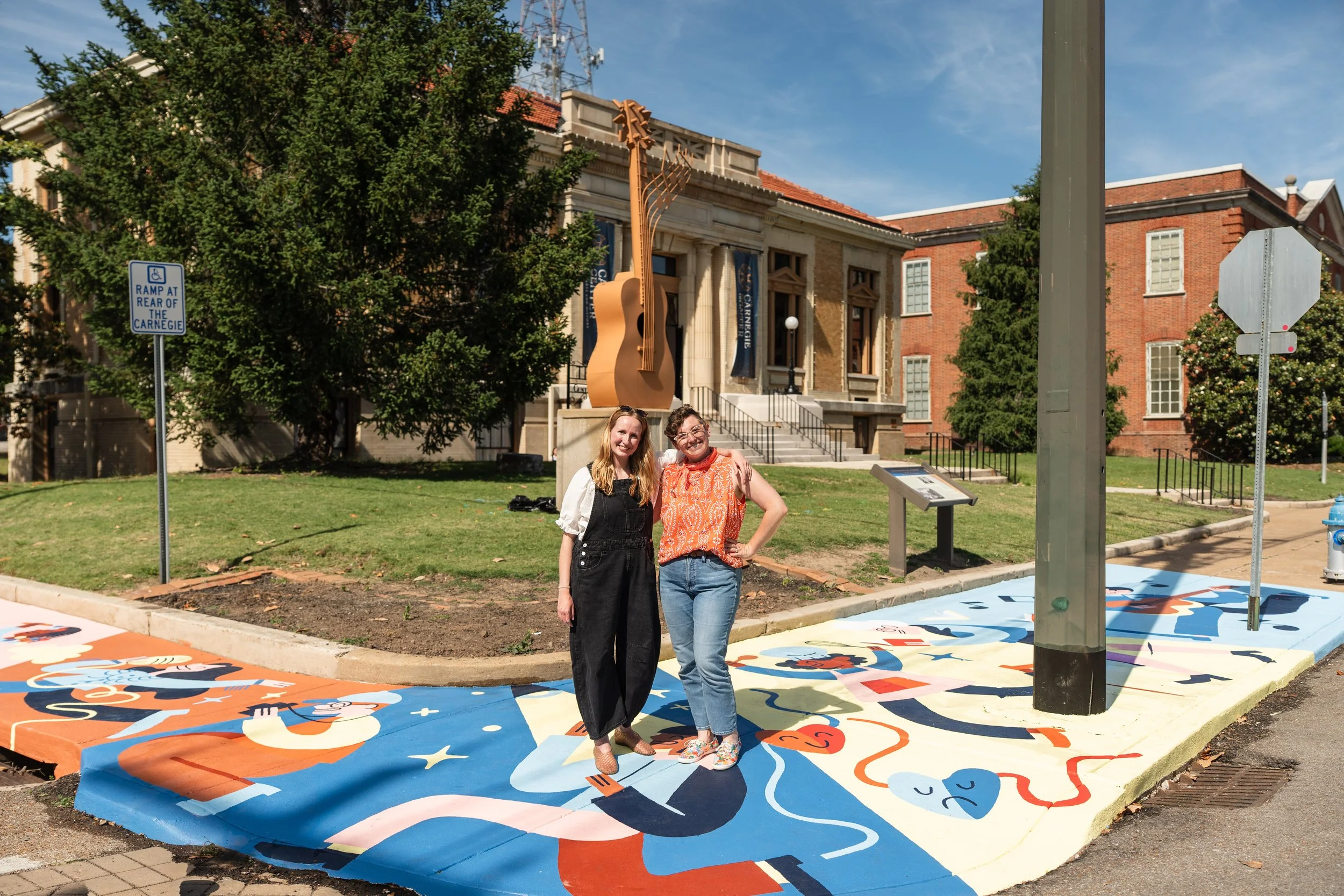
"And just to bring a little happiness and break up the beige concrete!" laughed Hilary Griffith, one half of the artist team behind the new sidewalk mural, “A Parade of Possibilities.” This project was designed and installed by Hilary Griffith and Katie Howerton, making this their second mural downtown together.
To understand “A Parade of Possibilities,” you first have to understand the history of the Carnegie itself. It has been a building that has quietly reinvented itself again and again across its long life in downtown Jackson. It began as a public library, became a beloved children's museum, and now houses the Tennessee Legends of Music Museum and is an art gallery, performance venue, and so much more.
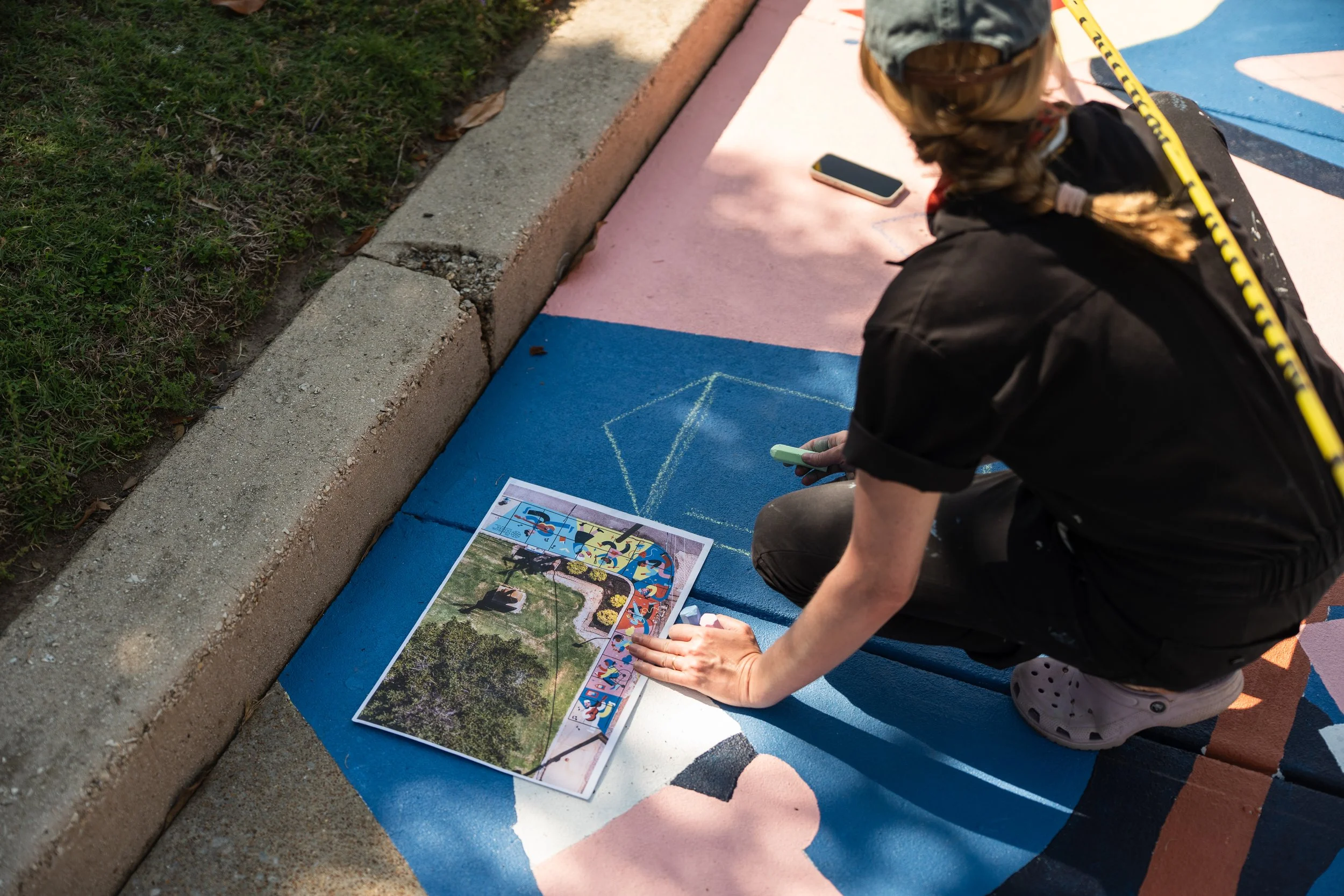
The layered history of the building is exactly what drew inspiration for Hilary and Katie from the start. They began by researching the Carnegie's evolution, asking what this building had been, what it had held, what it had meant to the people who passed through its doors across the generations.
From that research, the concept emerged: a parade of figures, each one representing a different artistic discipline housed or honored by the Carnegie over the years. Theatre, writing, the visual arts, photography, music, and culinary arts — a nod to the Dreamers and Makers Club, an after school youth visual arts and culinary arts program that meets inside the building, who also participated in the installation of the mural.
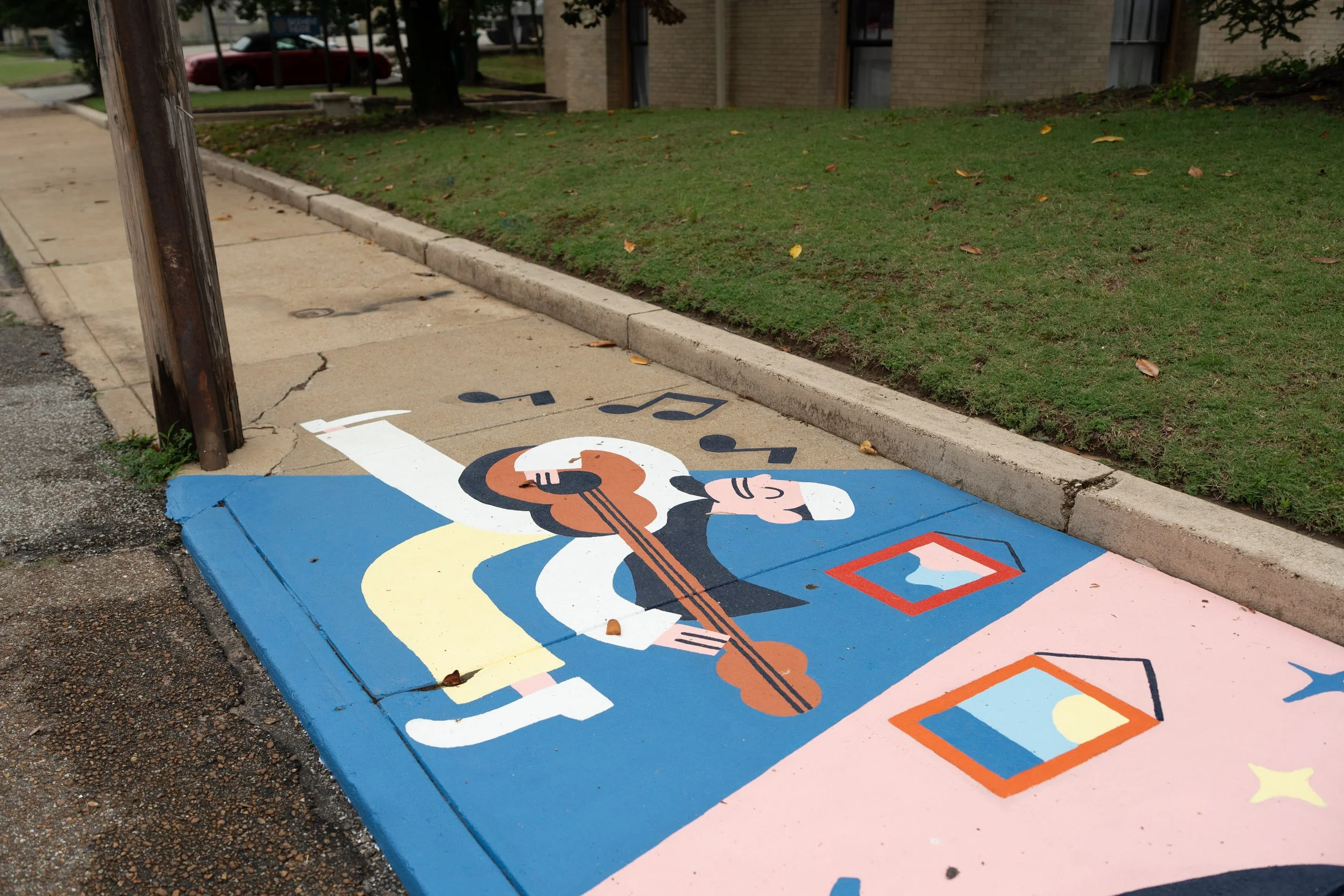
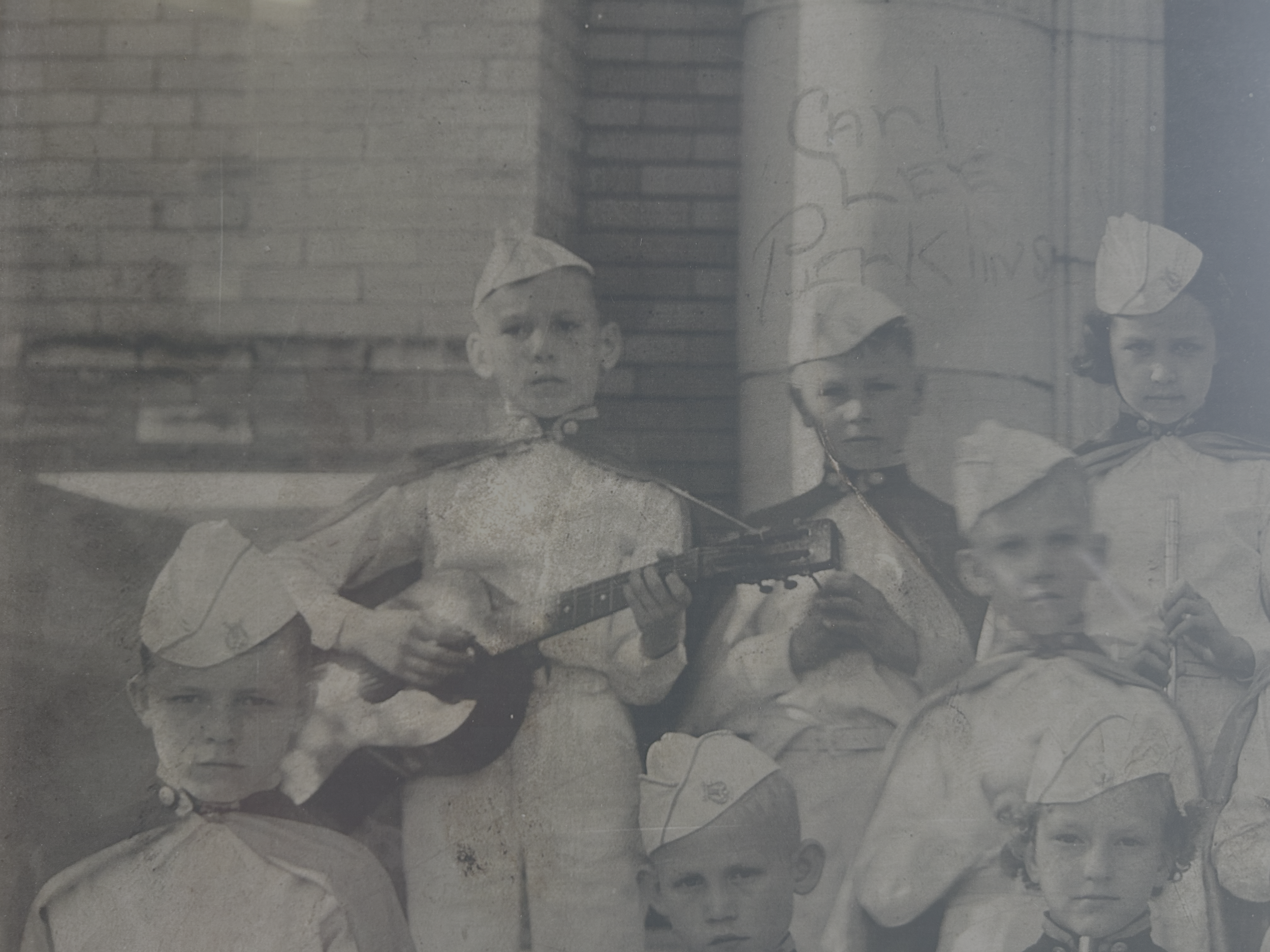
The parade has a beginning and an end, and both belong to the same person: Carl Perkins.
The choice was inspired by one photograph. It pictured young Carl Perkins on the very steps of the Carnegie as he wanted to play guitar in the marching band. That image of longing, of a kid pointing himself toward something the world hadn't seen yet, became the anchor of the entire mural.
The parade opens with Carl as a child and it closes with Carl as the artist he became. In between, the whole spectrum of the creative life unfolds.
"I think it also shows, you know, a lot of the people here, start as children in the arts and then can grow to something more amazing," Katie said.
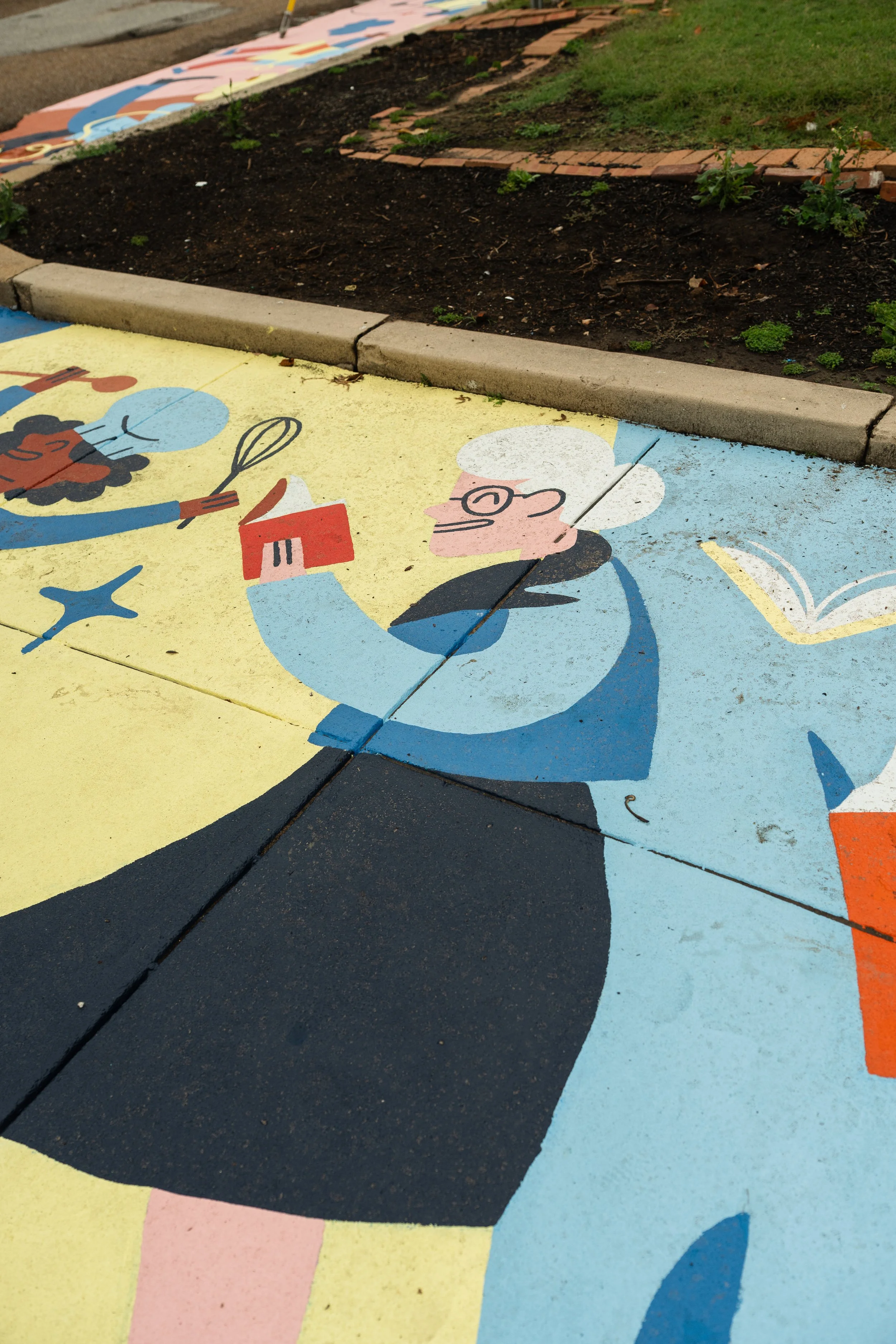
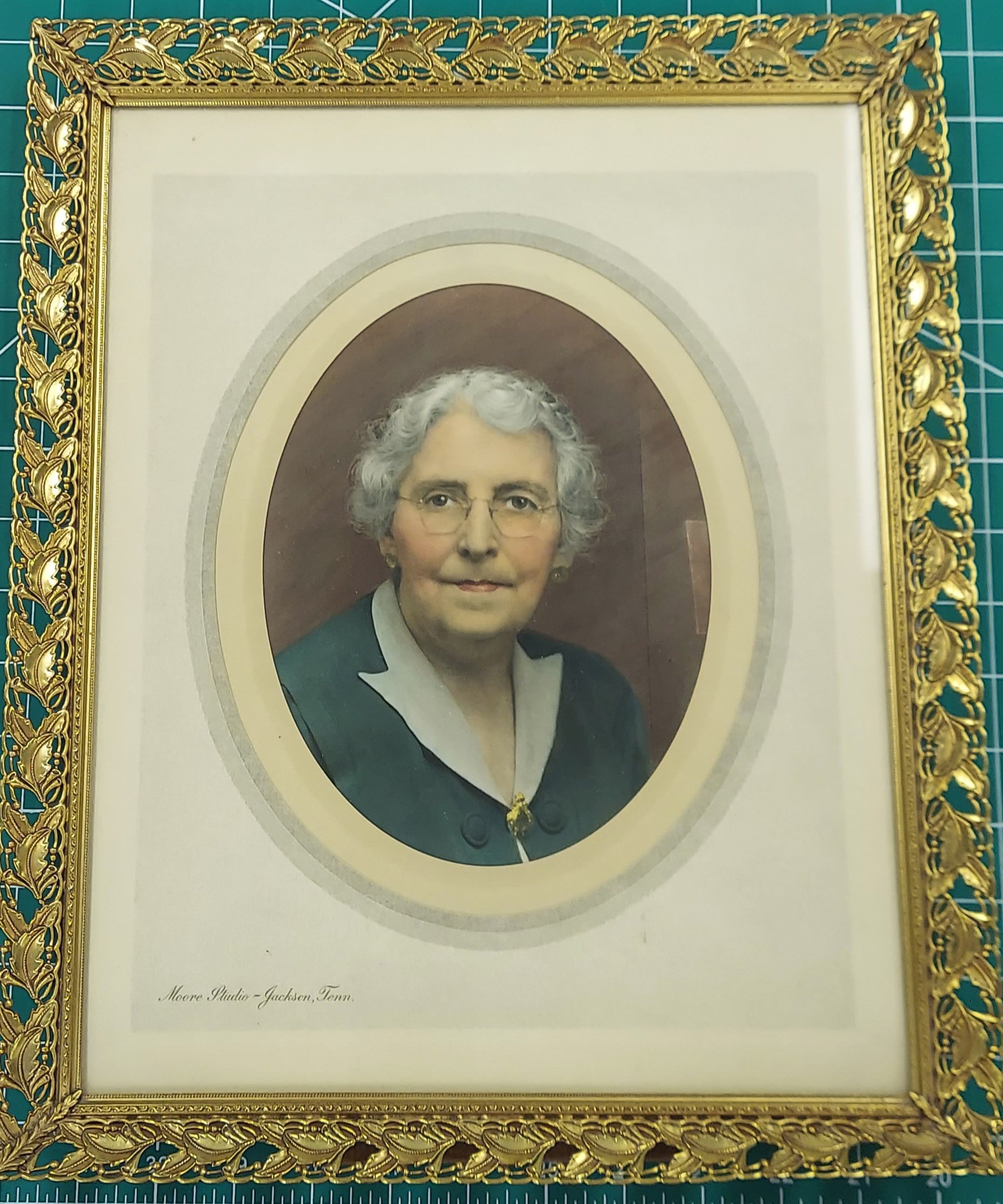
The parade also pays tribute to Alice Drake, one of the Carnegie's first librarians, who served the building for roughly fifty years when it was still a public library. Her inclusion is a reminder that the people who quietly tend to the places where culture lives are part of the impact too.
Practically speaking, the parade also functions as a directional cue, guiding visitors toward the parking lot and basement entrance of the Carnegie. It functions on multiple levels: as a history lesson, a welcome mat, a love letter to the people who made this building what it is.
"Hopefully this entices people to be like 'oh these things are happening, I should pay attention to this building and this area,'" Katie said.
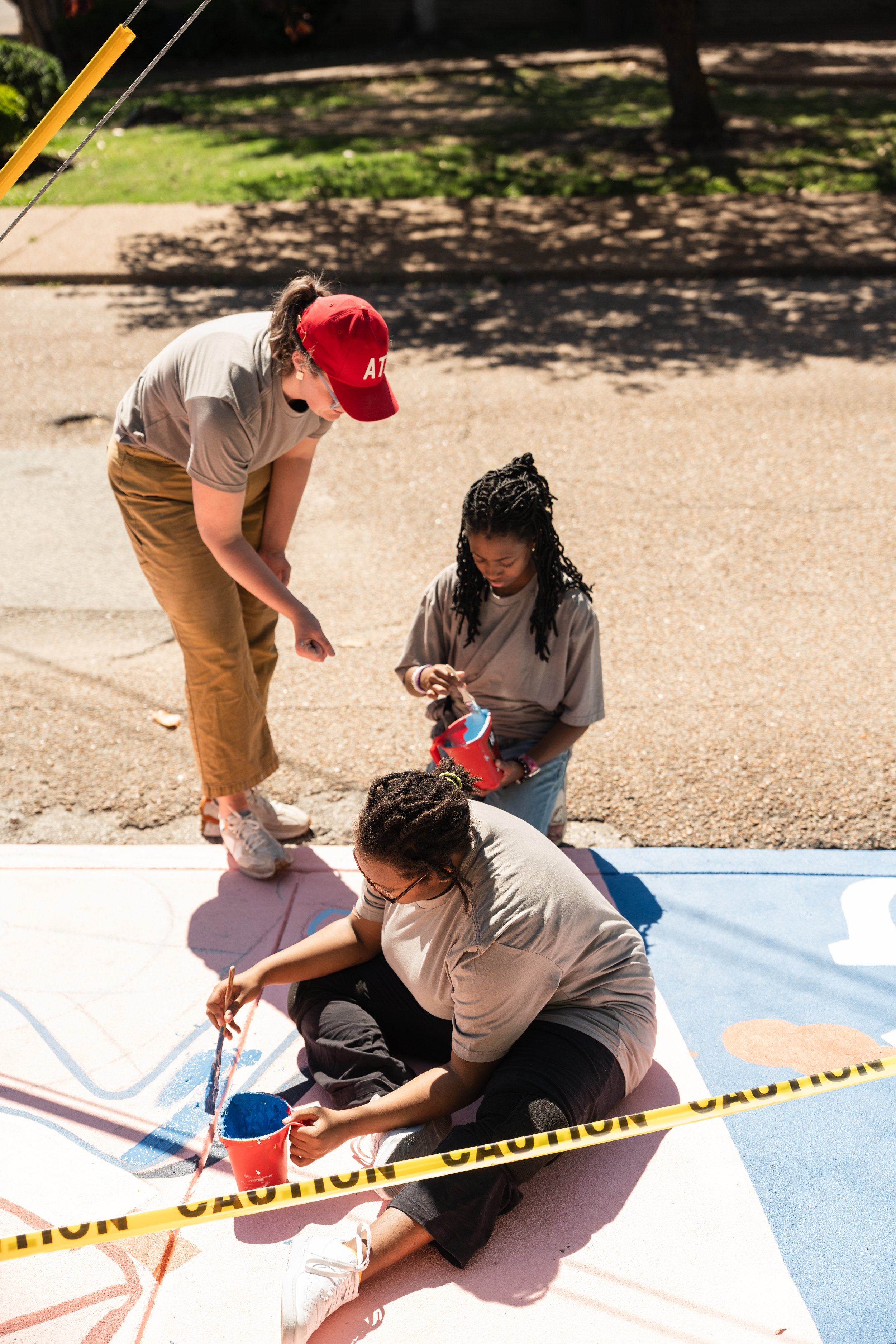
I’ve covered many public art installations in Jackson over the past few years. I have photographed murals going up on building walls, interviewed artists covered in paint, written about the slow and wonderful way color has been creeping back into this downtown. But usually I’m watching from behind a lens.
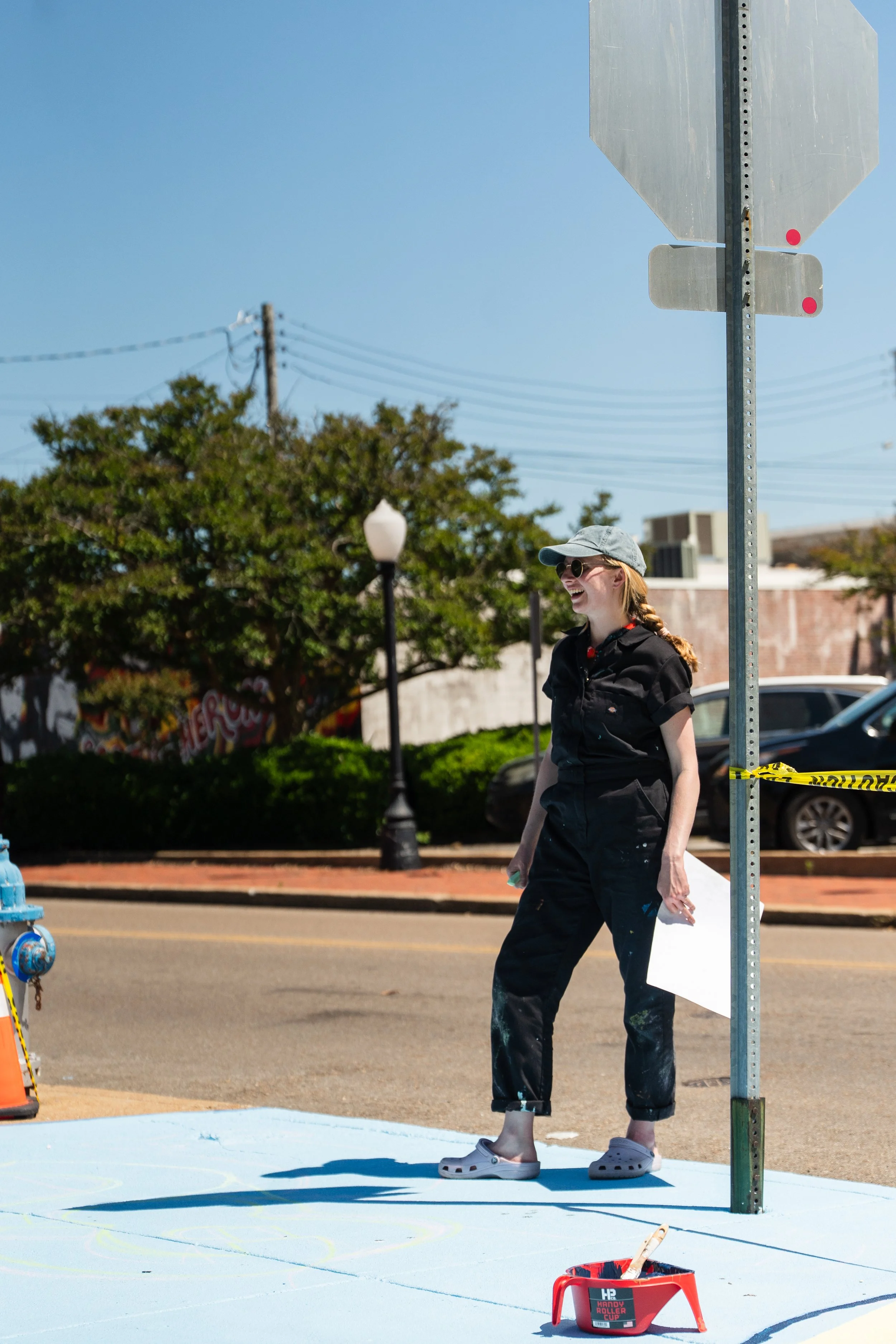
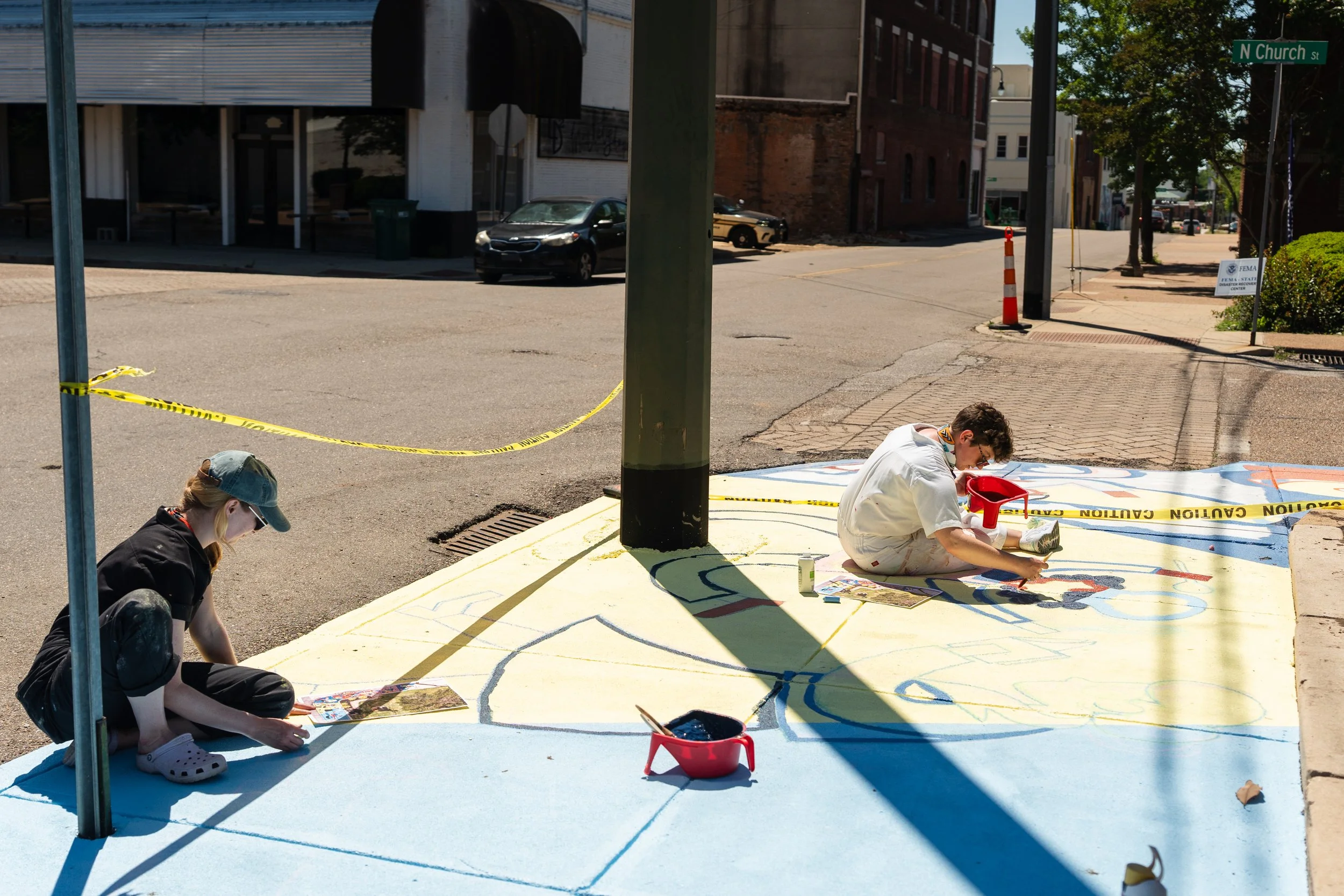
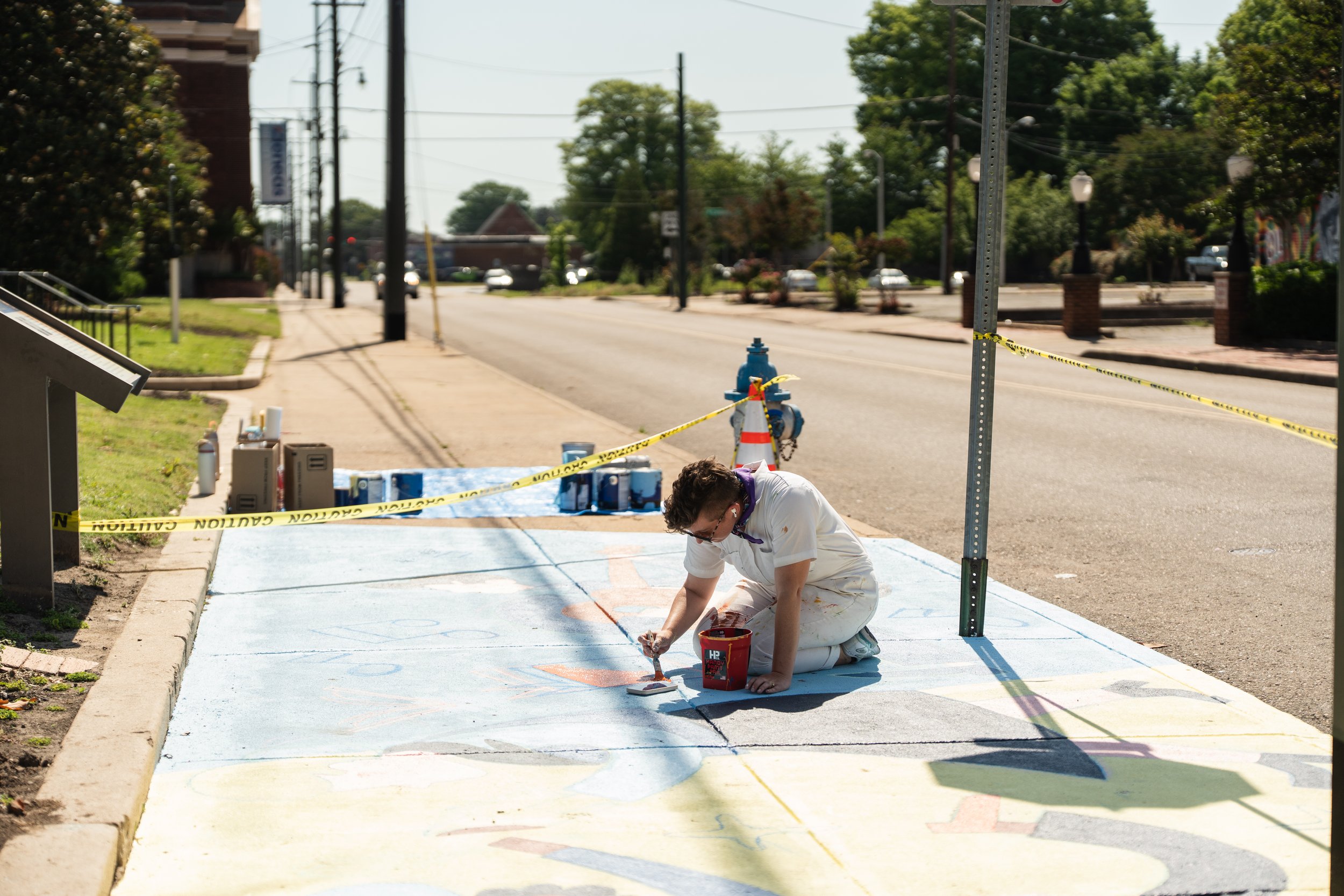
This time, I got to pitch in for a short time and help Katie and Hilary get their art on the ground.
Nothing quite prepares you for the physical reality of a sidewalk mural. You can’t step on it while it's wet, which means you are constantly recalibrating your body — reaching, stretching, lying flat on the ground beside your work. Katie and Hilary couldn’t step back and see the whole thing the way they could with a wall mural; the full picture only exists in your imagination and in the design template, not in your eyeline. Installing a sidewalk mural is physically taxing and is a labor of love, which also requires many hands to volunteer and help out.
And it is completely worth it.
The work itself was divided between them in a way that played to both their strengths. Hilary led the main design and color palette, with Katie giving her input along the way in the design process. During the installation, Katie brought her eye for shape and dimension, handling much of the physical painting while keeping the big picture in view. Hilary finessed most of the smaller details you see in the murals. Volunteers helped move things along, which Hilary says made an enormous difference — not just practically, but emotionally.
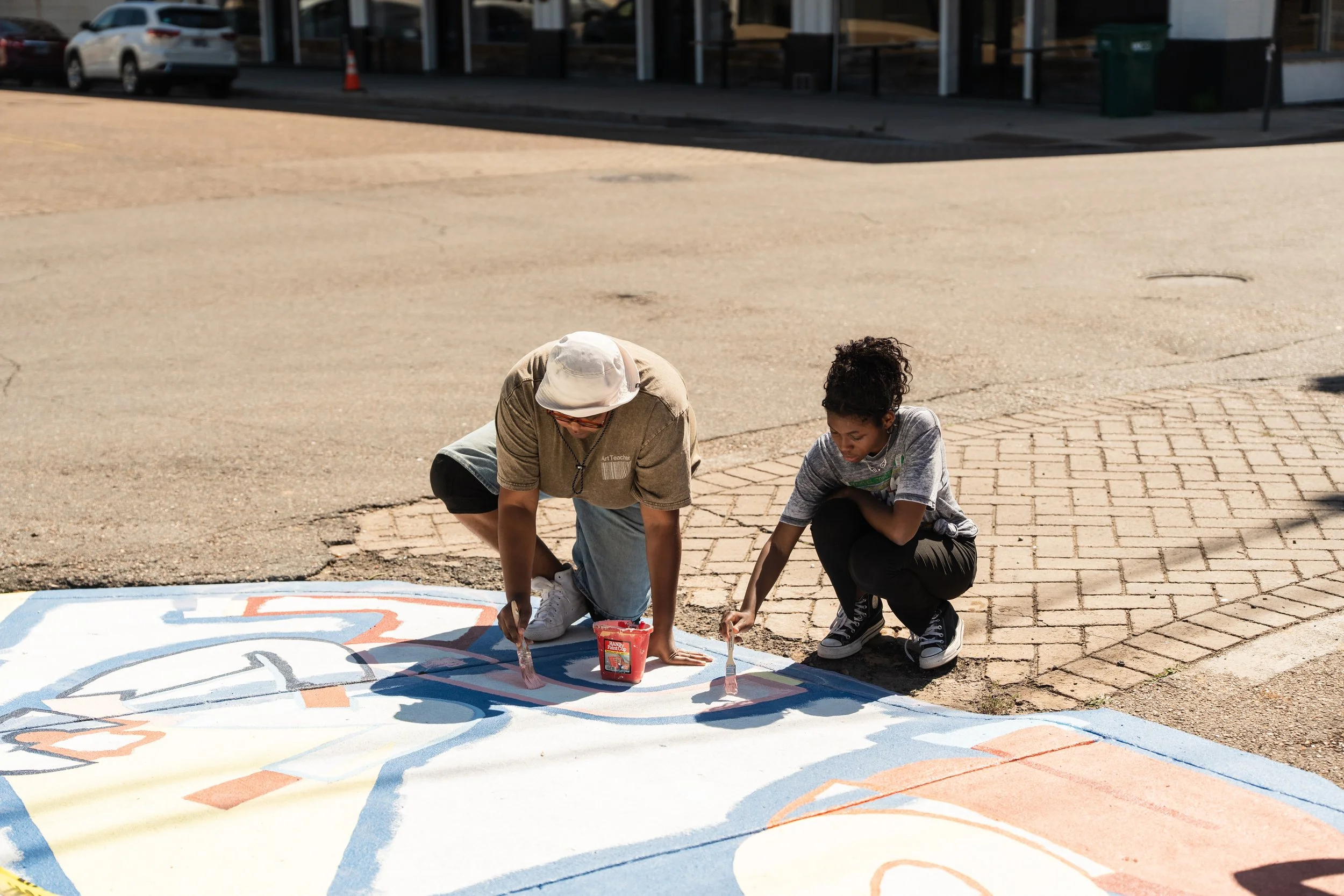
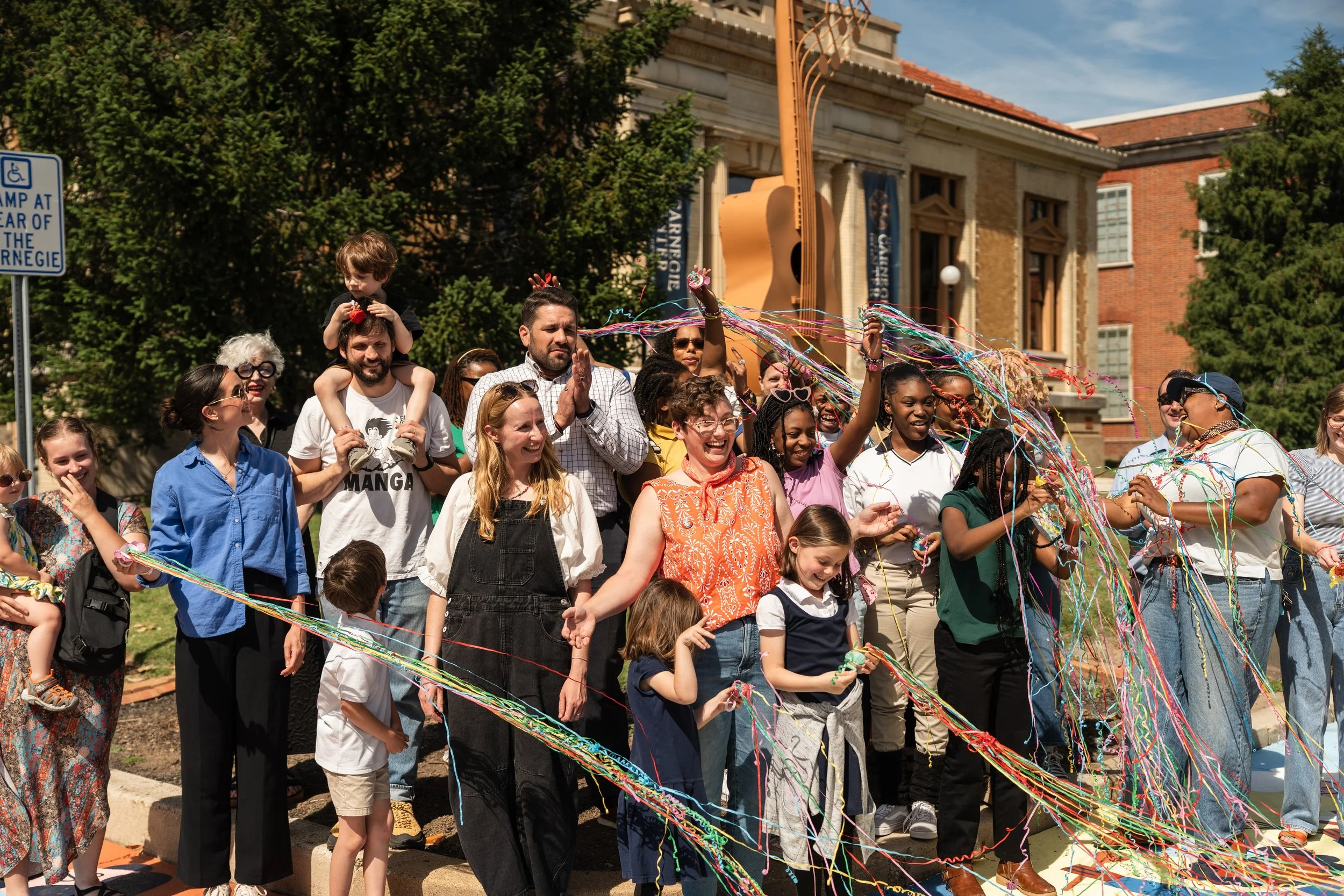
The Dreamers and Makers Club students helped paint the mural too. They picked up brushes and made it their’s, filling in shapes alongside the artists who designed them.
Hilary spoke about the moments of seeing volunteers help with a kind of wonder.
"In the end it's not our art. We don't own it, so detaching yourself from that and realizing that the city owns it and it's everyone's art,” Hilary said. “Seeing people's faces beam with pride after they've painted in a guitar or a shape reminds me this is all of ours."
It takes a particular kind of artistic confidence to pour yourself into a work and then open your hands.
"Art can be so isolating sometimes," Hilary reflected. "But hearing people walk by or drive by and just have genuinely positive comments, and encouragement is just always surprising to me, and it's just the best."
The Carnegie Sidewalk Mural, "A Parade of Possibilities," is located at 305 E College St. in downtown Jackson, Tennessee. Stop by, walk on it, follow the parade and discover your own future of possibilities as you head inside.