
Erik Vaughn Klasa: Finding His Place in Jackson
Written by Crista Beals
Photos by Colton Creasy
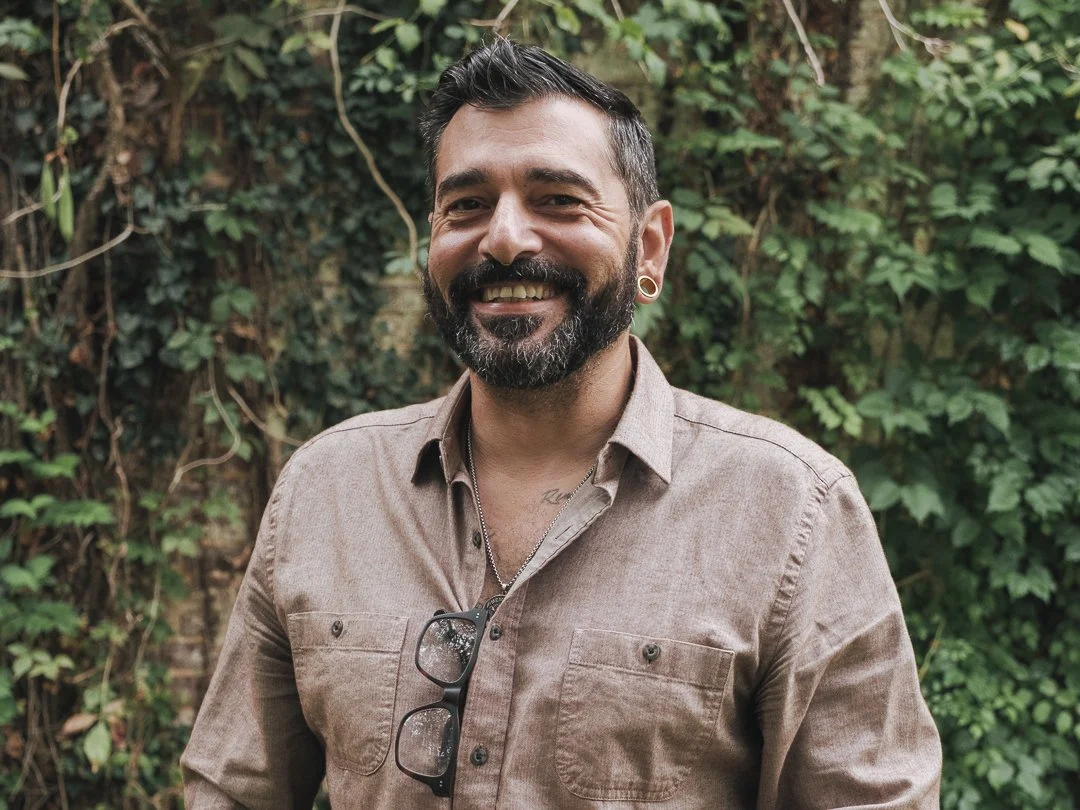
Erik Vaughn Klasa is hard to miss.
When I walked into Gylden Bakehouse to meet him, he was at a table, talking to someone he had apparently just met. I discreetly looked him up on Instagram to make sure I had found the right man.
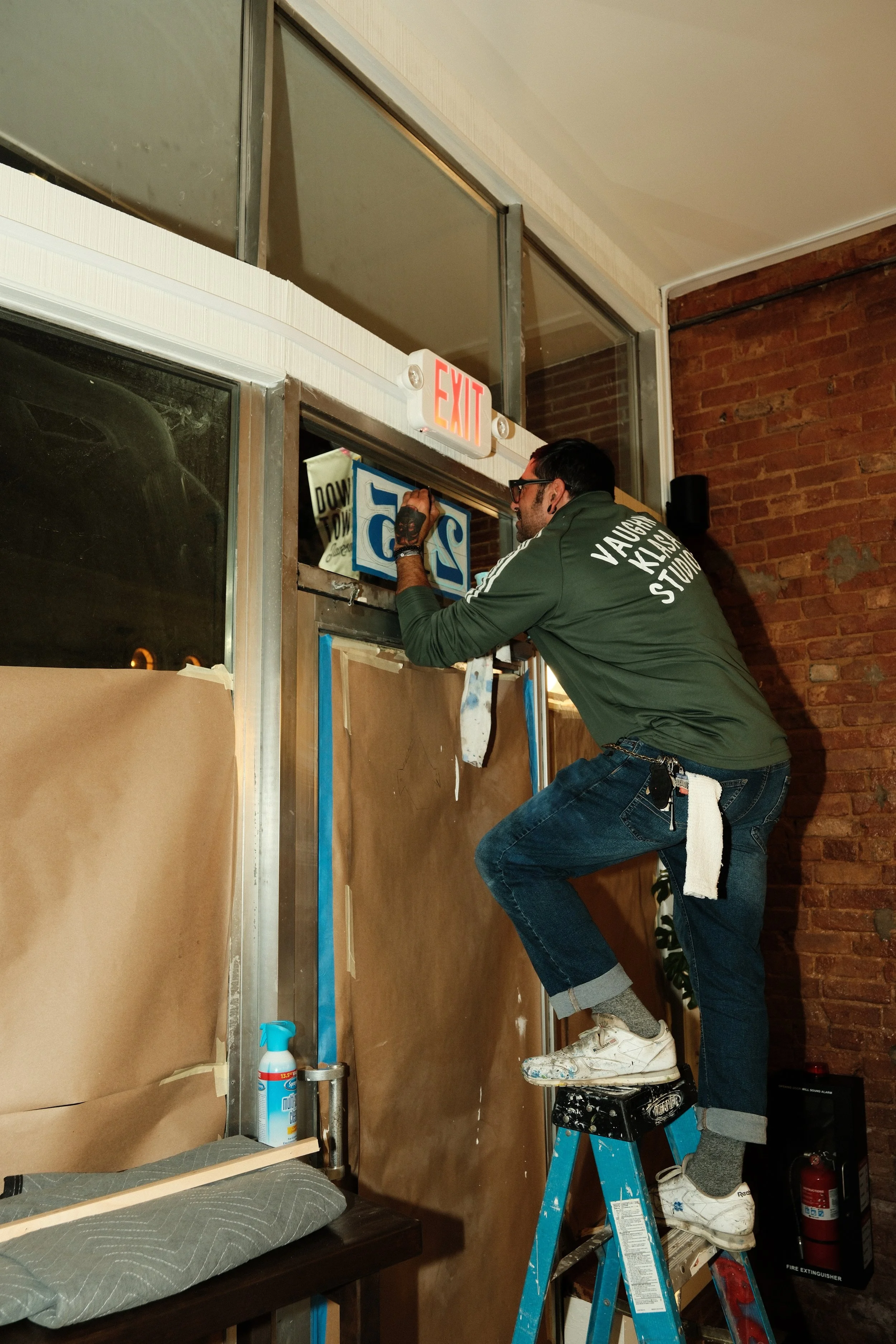
I knew I had found him when I heard him start talking about painting the signs for Gylden.
It didn't take long to figure out that the man across from me had lived several lives.
“I’ve been all over the place,” Erik told me. “Trying to discover who I am.”
Drawing has been in Erik’s life from the beginning. “I was always an artist,” he said. He studied animation and media arts in Philadelphia, then illustration and life drawing in Manhattan. He still considers himself a traditionalist who would rather have a pen and paper than a digital tablet.
But school wasn't where his life found its direction. He describes himself then as “kind of a bit of a misfit.” He was getting into trouble, and his mother worried about where he was headed.
“She’s like, well, what are you gonna do with your life? You're gonna wind up dead or in jail if you keep doing the things you're doing,” Erik said.
Two days later, a pamphlet for the Marine Corps arrived in the mail, and Erik drove to a recruiting center and joined.
“I was like, this is it. Like, I need to change my life.”
He served as an infantry Marine based in California in the late 1990s, earning the first of his two jokingly named “dog” titles: Devil Dog.
After the Marines, Erik headed to the Virgin Islands, where he bartended and worked as a tattoo artist for about a decade. It was there that he met Paige and fell in love, but after 9/11, Paige returned home. They went their separate ways, and for more than two decades, their lives moved in different directions.
Eventually, Erik returned to New York, where he was restoring antique furniture in a Brooklyn basement with a sad Polish man. He came across a Craigslist advertisement seeking a “walldog apprentice.” The ad asked, “Are you blue collar? Have you been in the military? Well, then this is the job for you. And if you’re good, we’ll teach you how to paint.”
Erik applied, and when he showed up, he brought a portfolio of tattoos and drawings. The other applicants brought paintings. They told him he might never become a painter.
He took that personally. “I’m a veteran Marine, born and raised from New York. You’re not going to tell me what I can and can’t do.”
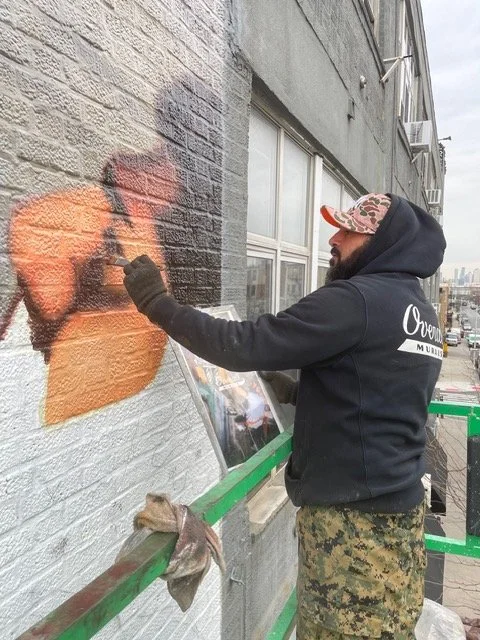
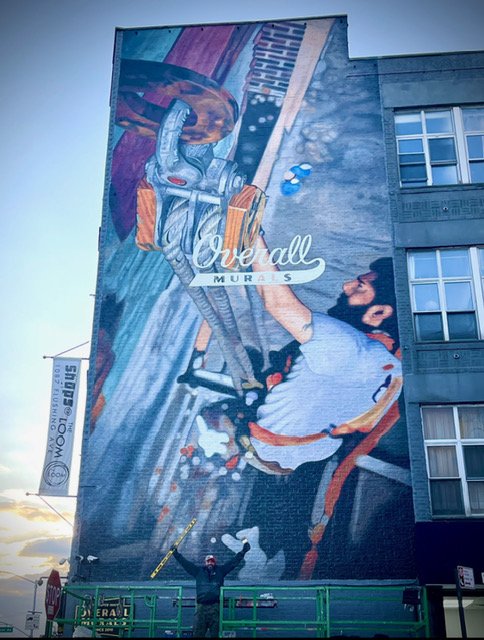
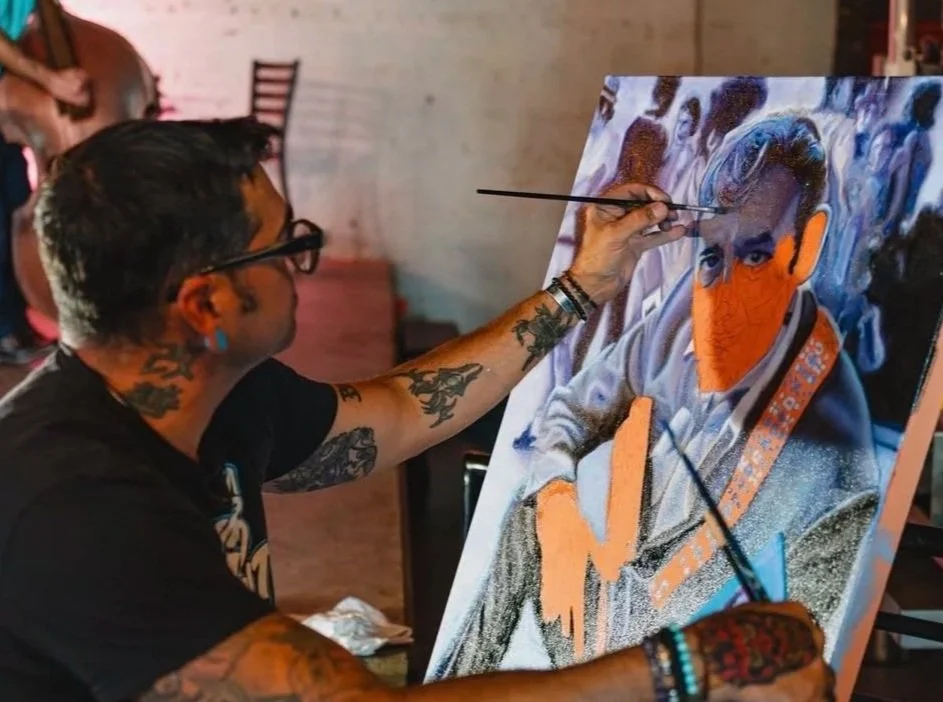
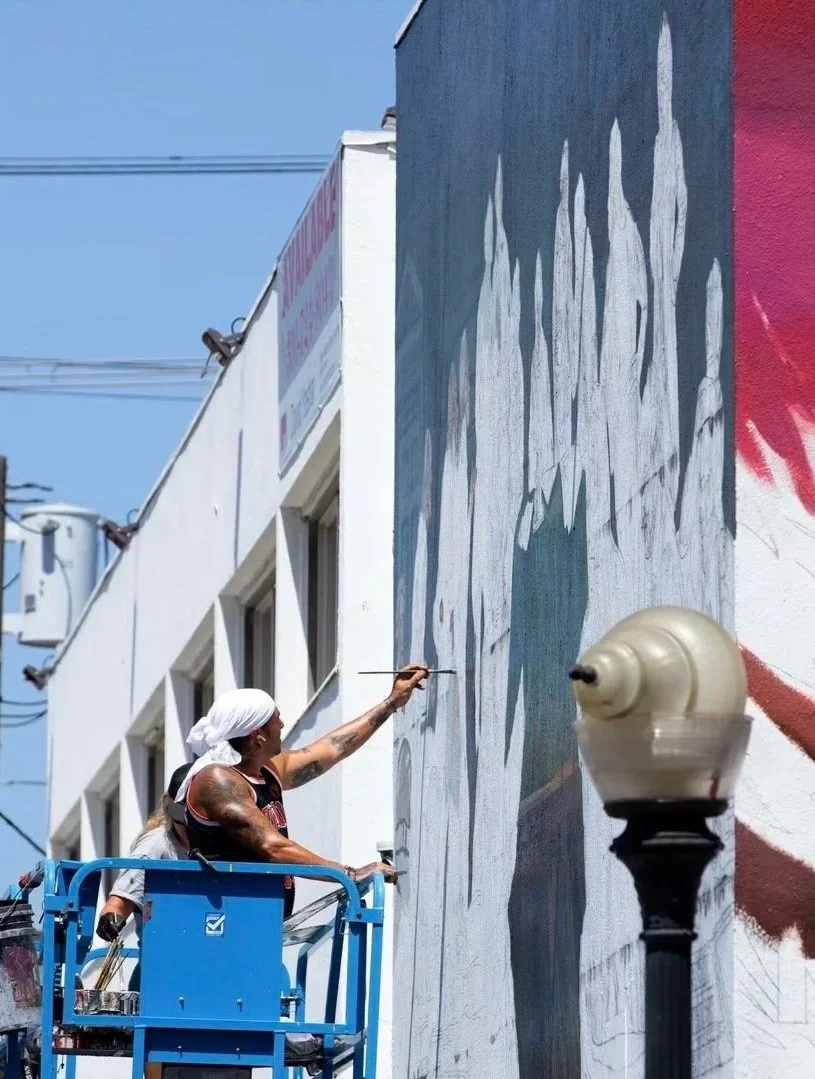
He spent about two years proving himself before becoming a painter, launching a 14-year career hanging from buildings across the country to paint enormous commercial advertisements. The work earned him that second “dog” title: Walldog (so called because they are attached to rigging/”leashes”).
He worked through New York snowstorms and 115-degree New Orleans heat. During the pandemic, he painted a 310-by-90-foot thank-you mural honoring nurses staying at the hotel across from his worksite, completing it in just nine days. “It gets me in the heart every time I think about it,” he said.
Then, after more than two decades apart, Erik and Paige found each other again on Instagram. The feelings had never truly gone away. There was only one small problem: Paige lived in Jackson, Tennessee. Erik lived in New York City.
“This is crazy,” Paige told him. “How do we do this?”
His answer was characteristically Erik:
“Easy, I’m gonna quit my job, pack my house up, and move down there.” “I lost her once. I wasn’t gonna lose her again, so…” he told me.
Two years ago, just before Christmas, Erik moved to Jackson, leaving behind a six-figure career.
His estranged father had told him artists don't make money. Erik built a six-figure career doing what he had been told would never amount to anything.
“I wish I could catch up with him and be like, ‘Hey, Bruce, remember you told me I was never gonna amount to it?’” “I made it,” Erik said. “As far as I was concerned, I made it.”
And then he gave it up.
Making it and loving what you do are not always the same thing. The work could also be, in his words, “soul sucking.” There were revisions, corporate expectations, and the feeling that the artist could become “just the hammer that’s used to get the job done.” He wanted something more personal, where the hand behind the work was still visible.
“It’s the human touch, the human error of brush strokes not being right or little imperfections that show you there’s still a human touch into things.”
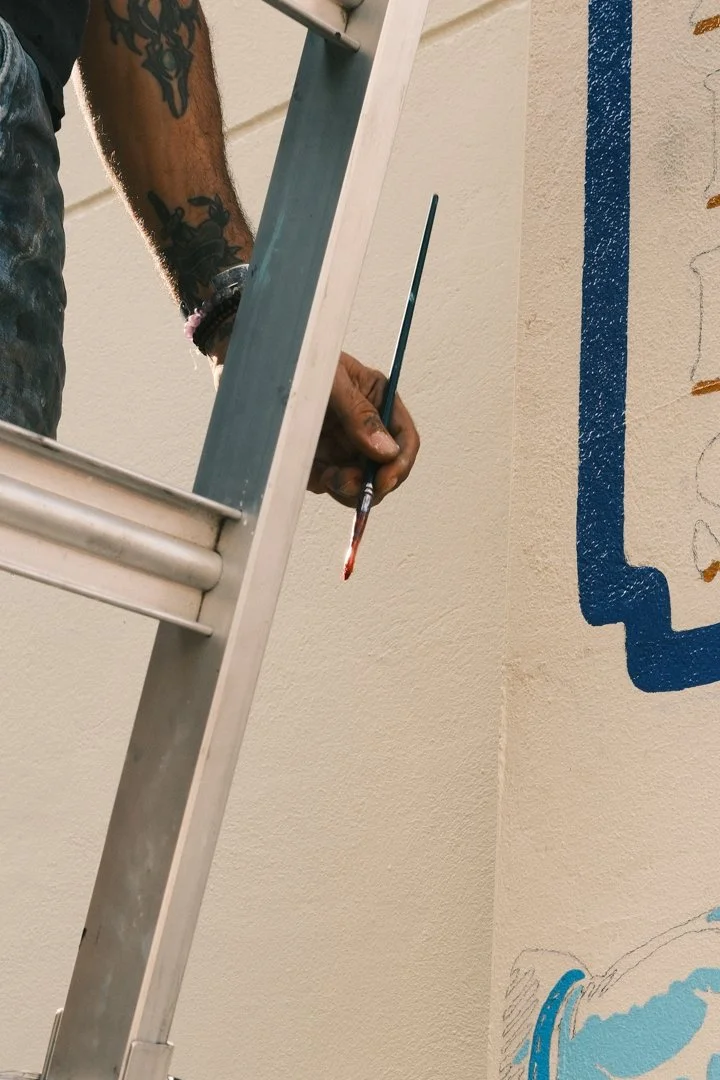
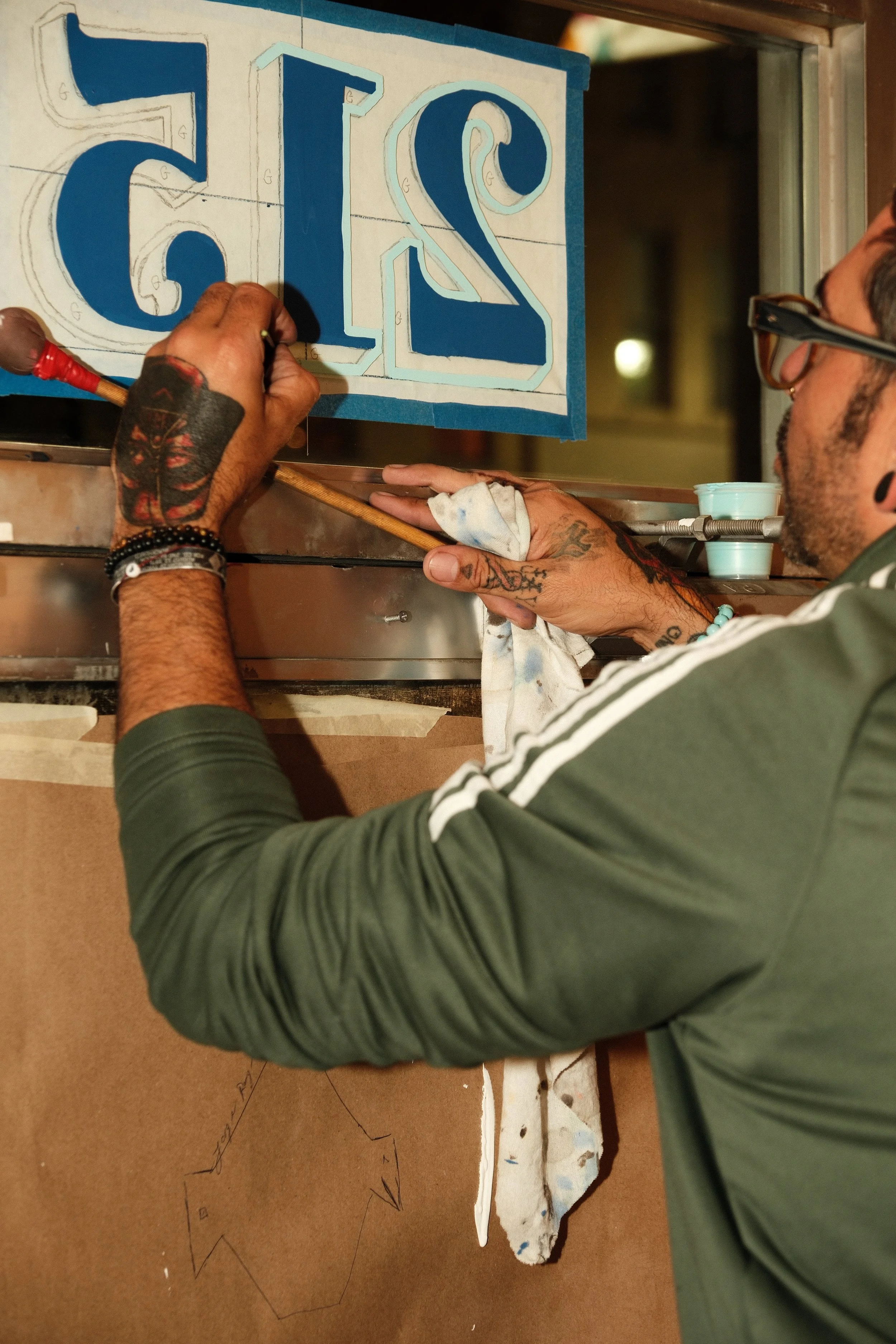
Finding his place in Jackson's arts community didn’t happen right away. At Our Jackson Home’s Design Dash, Erik was asked to step in as a mentor when someone else couldn't make it because of a snowstorm. He shared what he knew about approaching a wall, choosing materials, and executing a large-scale design. Not everyone immediately understood who this guy from New York was or why he was there.
It was familiar to someone who had spent much of his life as an outsider. He saw a difference between New York's arts community, where artists shared opportunities and brought one another onto projects, and the one he was just beginning to enter here.
“There’s enough walls for everybody, honestly.”
Erik doesn't believe artists should guard their territory. “We have a right to be proud of what we do,” he said. “But I feel like in the industries that I work in, and as artists, that ego really should never be a thing with anybody. We should boost each other up.”
Over time, Jackson began to feel more welcoming. He was invited into a West Tennessee artists’ Instagram group, and introductions started to feel more like community.
“This year has been a much more welcoming year for me,” he said.
His first local sign painting was at the Lost Reserve, but his work at Gylden Bake House began putting his name around downtown. Becca, Gylden’s owner, gave him room to create lettering that fit the European feel she wanted. He matched colors to the tile, added gold leaf, and even painted a bathroom reminder for employees to wash their hands, followed by one for everyone else.
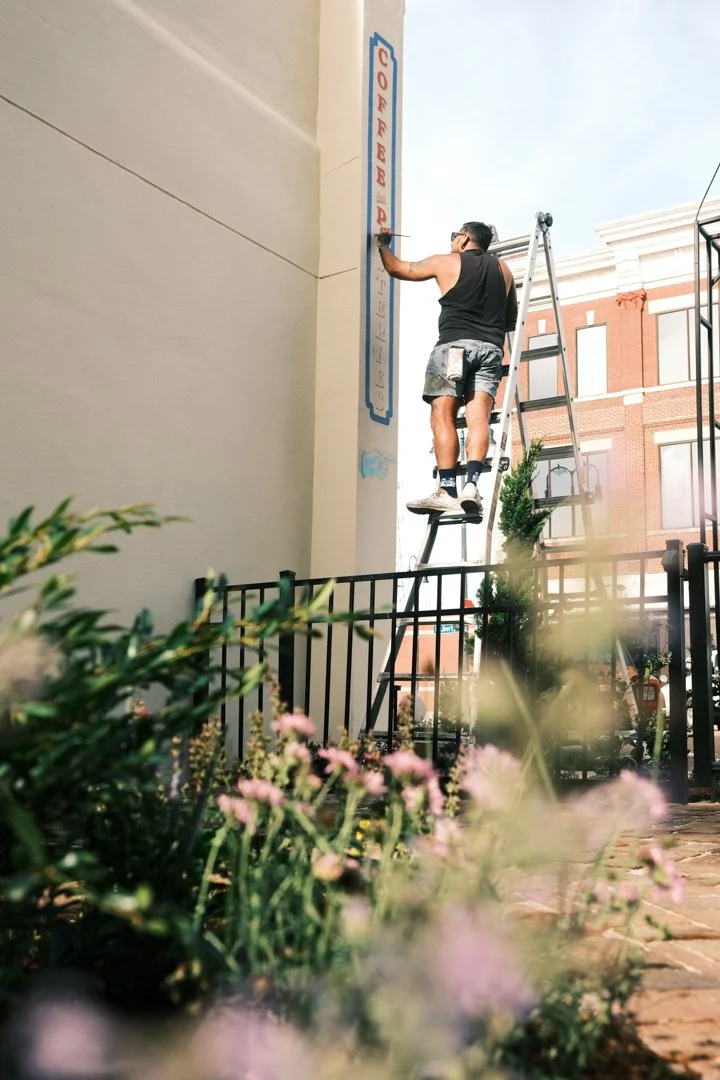
In Jackson, Erik notices the marks already here: an old RC Cola advertisement fading on a South Jackson building, or signage above downtown doorways for businesses long gone. These “ghost signs” are pieces of the city's story, and he wants to preserve them.
“I feel like downtown Jackson and Jackson itself has so much character,” he said. “And they're trying to revitalize that.”
He doesn't want Jackson to look like somewhere else. He wants it to look more like itself. He imagines gold-leaf numbers in storefront windows, painted logos on buildings, Carl Perkins or the Million Dollar Quartet on a wall, local flora winding through a mural at Gylden, or an old Field & Stream-style scene at the Lost Reserve that feels like a postcard from West Tennessee.
Maybe that is part of what makes a place start to feel like home. Erik talks about the slower pace, people who take time to say hello and ask about your life, the fields and cloud formations, horses and cows, and quiet walks at Middle Fork. He laughs about learning what “bless your heart” really means. When he travels, he finds himself wanting to come back.
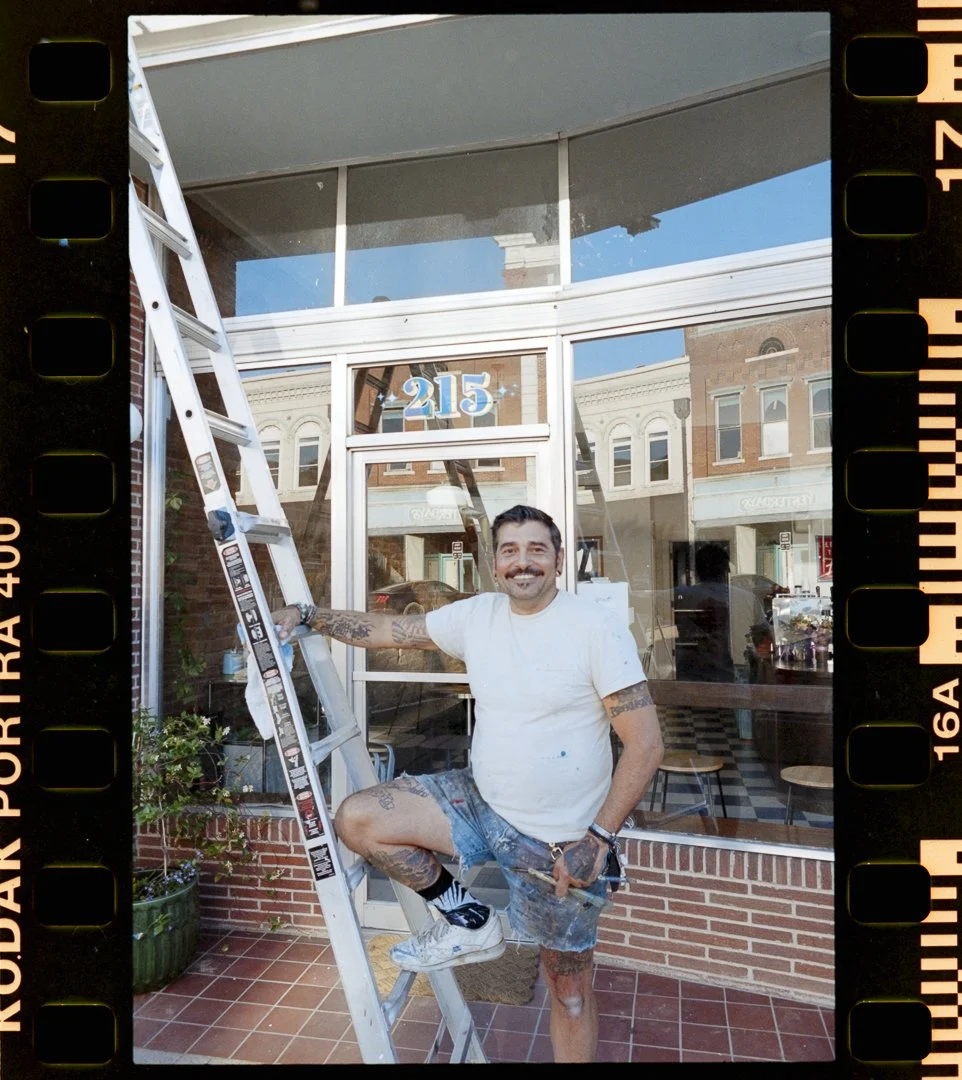
“I’m ready to go home,” he said. “Send me back to Tennessee. I’m good.”
For years, Erik was looking for the next thing, the next place, the next version of himself. He came to Jackson because he fell in love with Paige again. Somewhere along the way, he started falling in love with the place, too.
Maybe that is why he notices the things he does: old paint worth saving, blank walls worth filling, businesses that could use a little more character. A city that doesn't need to become something else to be beautiful.
For businesses and Jacksonians looking to bring a little more of that human touch to their own spaces, Erik is ready to put brush to window, wall, or sign. His work can be found on Instagram at @vaughn.klasa.studios, or he can be reached by phone at 731-267-3494 or by email at vaughn.klasa.studios@gmail.com.